
Haute Couture
30 articles
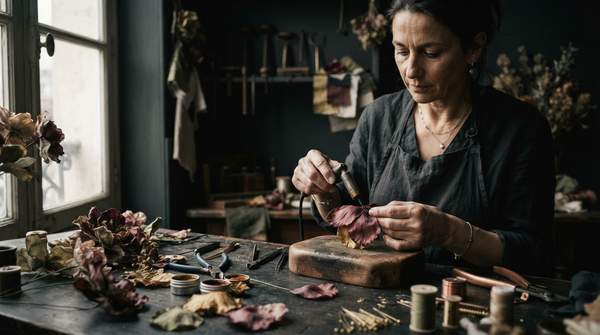
The Parurier Floral: How Couture Fabric Flowers Are Actually Made
The parurier floral is a specialist in crafting couture fabric flowers, employing a meticulous, multi-stage process from fabric preparation and precise cutting to intricate shaping and hand assembly. This rare savoir-faire imbues each artificial bloom with the unique imprint of the maker's hand, a quality highly valued in haute couture.
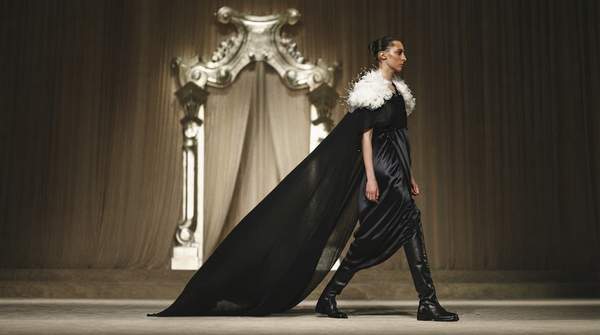
The Couture Client Was Never Just a Customer: How Patronage Built Haute Couture
Haute couture clients have historically been integral structural partners, acting as collaborators, patrons, and muses, rather than passive consumers. Their influence, though evolving from public figures to discreet collectors, remains fundamental to the craft's existence and creation.
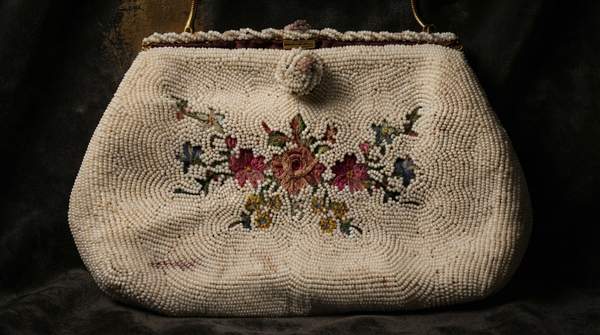
Point de Beauvais: The Silk-Road Chain Stitch That Became a Couture Signature
Point de Beauvais is a hook-worked chain stitch technique with ancient roots tracing back to China along the Silk Road. It remains a valued haute couture skill, prized for its fine, painterly line work and meticulous execution.
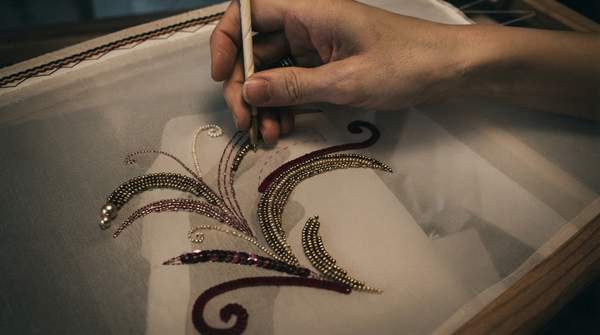
Hook, Needle, Machine: How to Tell Lunéville, Goldwork and 'Al Aire' Apart
Distinguish between Lunéville, Goldwork, and 'Al Aire' haute couture embroidery by understanding their unique tools, working methods, and resulting aesthetics. Identifying these styles relies on visual cues like the hook, metal threads, or machine-guided stitching.
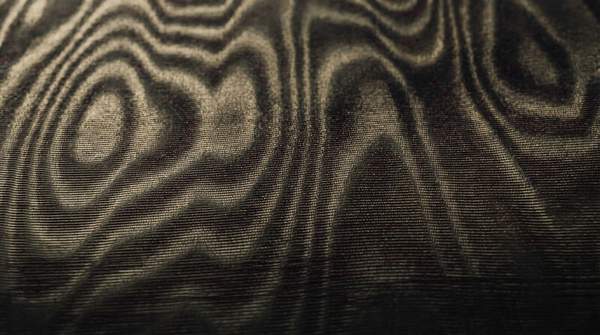
Watered vs. Burned Out: How to Tell Moiré and Devoré Apart in Haute Couture
Moiré and devoré are distinct luxury textile finishes, often confused but fundamentally different. Moiré is a mechanical process creating a 'watered' effect by crushing ribbed fabrics, while devoré is a chemical process that dissolves fibers to create 'burnout' patterns.
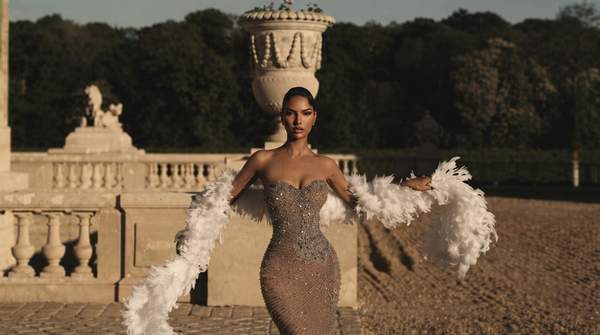
Plumasserie: How Featherwork Techniques Build Haute Couture's Sculptural Effects
Plumasserie is the haute couture craft of applying prepared feathers to garments and accessories, transforming them into architectural and dynamic forms. Understanding techniques like collage, layering, sculpting, and curling reveals how featherwork builds sculptural effects, adds motion, and creates unique textures in high fashion.
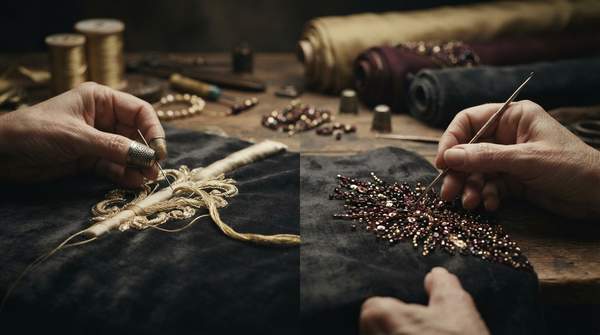
Goldwork vs. Tambour: Two Threads of Haute Couture, Two Entirely Different Machines
Goldwork and Tambour embroidery are two distinct haute couture traditions that differ fundamentally in their mechanics and aesthetics. Goldwork couches metal threads onto the fabric surface for luminous effects, while Tambour uses a hook to create a chain stitch from beneath, ideal for rapid bead and sequin embellishment.
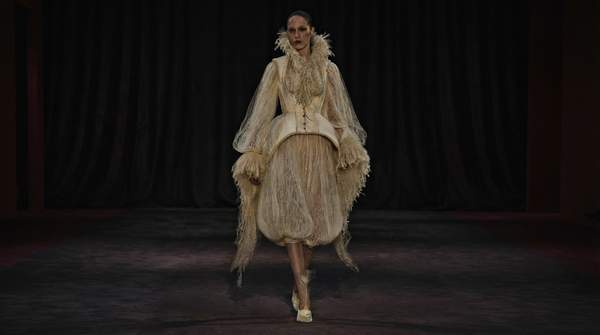
The Toile: Haute Couture's Working Blueprint, From First Calico Cut to Approved Prototype
The toile, a prototype garment made from inexpensive calico, is haute couture's essential engineering blueprint. It undergoes iterative fittings and adjustments to test fit, structure, and fabric physics, ensuring the final design is perfected before expensive materials are used.
Four Stages, One Garment: How Haute Couture Chooses Between Salon, Spectacle, Intimacy, and the Screen
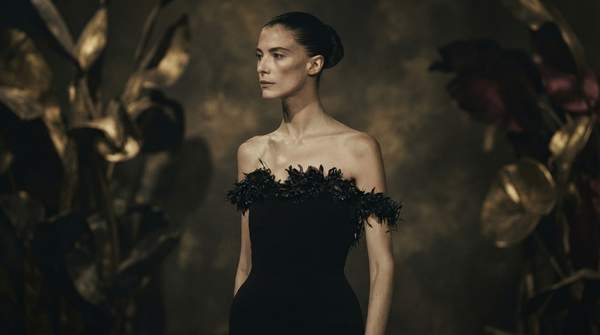
Haute couture presentation formats—salon, spectacle, intimate, or digital—are strategic instruments that shape audience perception, narrative control, and brand image. The choice balances global media impact with the exclusivity and detailed appreciation required for ultra-high-net-worth clients.
From Record to Reverie: How Fashion Illustration Became the Voice of Haute Couture
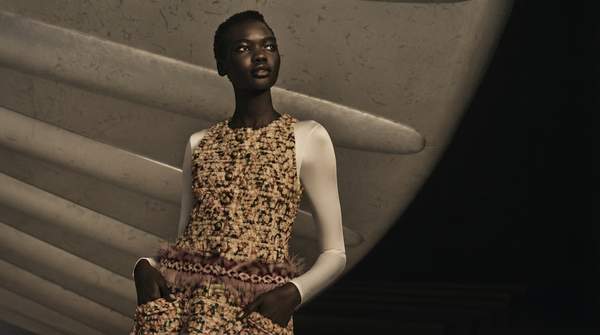
Fashion illustration evolved from a documentary tool to an interpretive art form, becoming the primary voice for haute couture's artistic vision after photography's rise. Today, illustration remains crucial for luxury brands, conveying exclusivity and brand storytelling in ways photography cannot.
Fortuny, Accordion, Sunburst: How Three Pleating Techniques Shape a Couture Garment
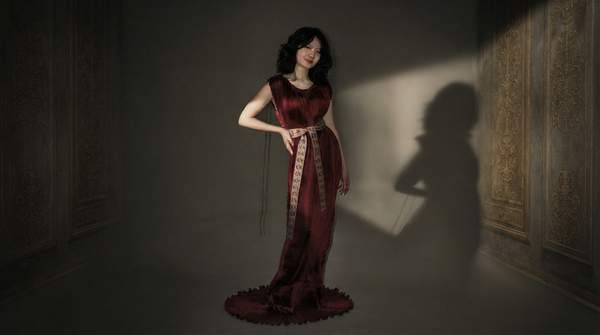
Explore three dominant haute couture pleating techniques: Fortuny's irregular plissé, uniform accordion pleats, and radiating sunburst pleats. Understand their unique creation methods, visual effects, and impact on garment design and movement.
Knit, Print, Paint: The Three Techniques Behind Trompe l'Oeil in Haute Couture
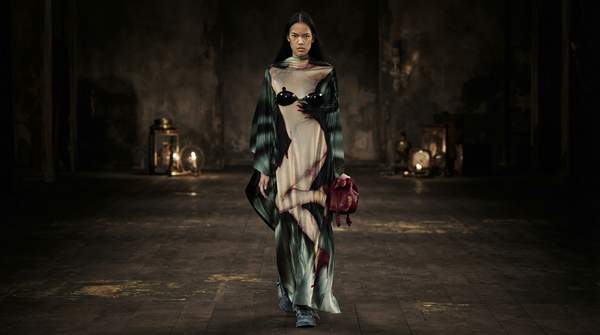
Trompe l'oeil in haute couture, meaning "deceive the eye," is achieved through three distinct techniques: knitting, printing, and hand-painting. These methods, pioneered by Elsa Schiaparelli and revived by modern designers, create illusions of depth, layering, and form.
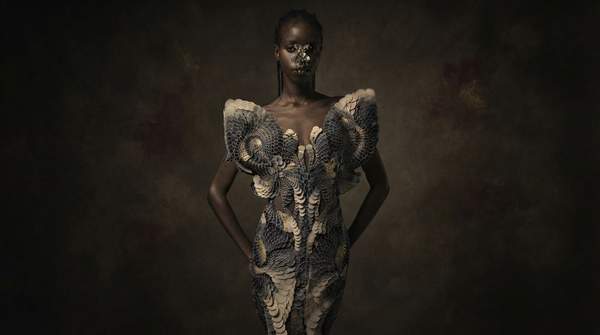
Two Paths to Sustainable Couture: Upcycled Scraps or Lab-Grown Fibers
Haute couture's sustainability is evolving along two distinct paths: upcycling existing textile waste through design ingenuity, and bio-engineering novel fibers from scratch in labs. Understanding the difference between these approaches—one extending material life, the other creating new performance textiles—is key to evaluating luxury fashion's sustainability claims.
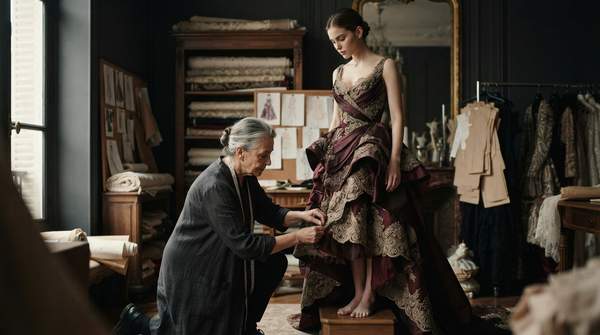
From Dressmaker's Client to Couture Insider: How the Haute Couture Relationship Was Inverted
The haute couture client relationship has evolved significantly over time, shifting from clients dictating designs to designers establishing themselves as authors of creative visions. Today's model offers a hyper-personalized, exclusive bespoke experience where clients collaborate within the designer's framework.
Métiers d'Art: The Master Craft Ateliers Behind Luxury Fashion's Rarest Skills
Métiers d'Art are specialized ateliers whose master artisans create the intricate embellishments essential for haute couture. Luxury fashion houses strategically acquire these workshops to preserve irreplaceable know-how and drive innovation in contemporary collections.
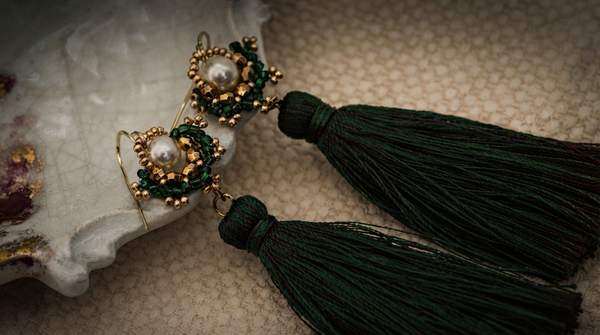
The Enduring Art of Passementerie: From Royal Courts to Modern Couture
Passementerie is the historic art of creating decorative textile trimmings, such as tassels, fringes, and braids, which have adorned royal courts for centuries and remain vital in modern haute couture and interior design. This craft signifies luxury, status, and a deep appreciation for detailed, bespoke artistry.
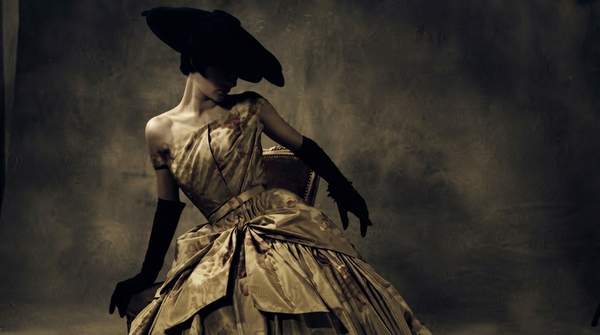
Defining 20th-Century Haute Couture Silhouettes: Innovation and Enduring Influence
The 20th century transformed haute couture silhouettes through groundbreaking innovations by designers like Madeleine Vionnet, Christian Dior, and Cristóbal Balenciaga. These iconic forms not only redefined femininity and modernity but also continue to exert a profound influence on contemporary fashion.
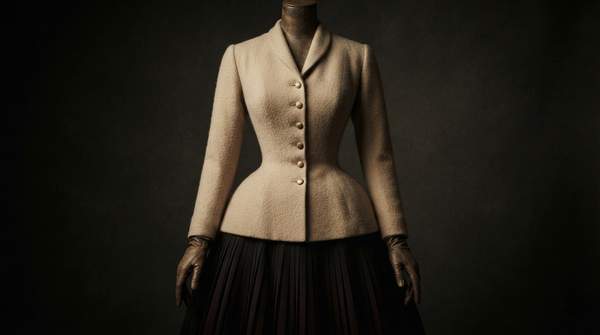
The Architectural Principles and Structural Impact of Dior's 'New Look' Silhouette
Christian Dior's "New Look," unveiled in 1947, dramatically reshaped post-war fashion with its opulent femininity and intricate structural design, contrasting sharply with wartime austerity. The collection's architectural principles, exemplified by the "Bar" jacket, revived French haute couture and left an enduring legacy.
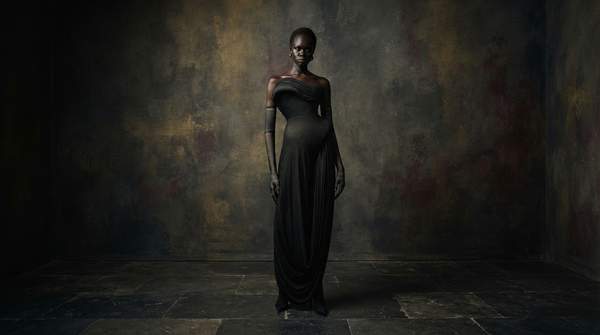
Haute Couture's Unseen Artistry: A Comparison of Lesage Embroidery and Lemarié Featherwork
Haute couture's grandeur is defined by specialized ateliers like Maison Lesage for embroidery and Maison Lemarié for featherwork. This article compares their distinct artisanal techniques, historical legacies, and the preservation of tacit knowledge that underpins these Métiers d'Art.

What is the historical evolution of silk weaving in haute couture?
In 1840, Queen Victoria defied royal custom, choosing a white Spitalfields silk gown for her wedding.

What Is the Artistic Merit of Haute Couture as Fine Art?
A single haute couture evening gown can demand over 1,000 hours of hand-stitching and cost more than a luxury car, yet its true value lies beyond its price tag.

Nigeria, India, Pakistan Fashion Weeks Showcase 2026 Global Trends
At India Couture Week 2026, Rahul Mishra's 'The Golden Thread' collection, featuring garments requiring over 3,000 hours of hand embroidery, drew major international buyers from Paris and New York for

What are high fashion craftsmanship innovations and why do they matter?
In 2021 alone, interest in 'Couture' declined by 13 percent, according to Luxuo .

From Ikat to Faience Beadwork: The Ancient Textile Crafts Behind Modern Haute Couture
Modern haute couture collections are increasingly drawing inspiration from ancient textile traditions, such as Uzbek ikat and ancient Egyptian beadwork, with designers like Christian Dior and Dolce & Gabbana translating these millennia-old techniques into contemporary high fashion by focusing on material and process.

AI and virtual couture redefine artistic boundaries
In a stark departure from tradition, Alexis Mabille recently unveiled an entire haute couture collection designed by artificial intelligence and showcased on virtual models, marking a significant mome

What Are Haute Couture Embroidery Techniques?
To learn the single chain stitch of Tambour embroidery, a technique essential for haute couture, aspiring artisans might pay 1000 Euro for a 50-hour summer course.

Manish Malhotra Among Indian Designers at Paris Haute Couture Week
A single chikankari garment, destined for the Fall 2026 Paris Haute Couture runways, can take over a year to complete.

Taakk Unveils Spring 2027 Men's Collection at Paris Fashion Week
Jackets, shirts, and bottoms in Taakk's Spring 2027 collection were adorned with intricate flower prints and tendril-like cutouts, framed by embroidered structures, making a bold statement during Pari

Gabriela Hearst Showcases Intricate Lace in Resort 2027 Collection
For her Resort 2027 collection, Gabriela Hearst's team painstakingly dyed fabrics to precisely match her watercolor sketches of desert-sky hues, a level of detail rarely seen in seasonal resort wear.

Bruno Sialelli Joins Balenciaga Studio to Elevate Couture Craft
Bruno Sialelli, celebrated for his refined tenure at Lanvin, has quietly joined Balenciaga's elite couture studio, according to WWD .