Haute couture presentation is not a neutral container for clothes; it is a strategic instrument. The format a house chooses—whether a traditional salon showing, a theatrical spectacle, an intimate presentation, or a digital show—determines how closely audiences can inspect the work, how tightly the brand controls its story, and how far its image travels. Fashion Week Online notes that houses maintain couture divisions for reasons including brand prestige, global media attention, client relationships, and maximum creative freedom, which means the staging itself carries reputational weight. The four formats below serve those goals differently, and the choice among them is the quiet decision that shapes everything a collection appears to be. (One caveat before we begin: the analysis concerns format, not the collections themselves, and it is specific to haute couture rather than ready-to-wear fashion weeks.)
The Strategic Canvas of Haute Couture Presentations
Why does format matter so much in this corner of fashion? Because haute couture is a regulated, official designation with a tiny client base—industry estimates cited by Fashion Week Online put active haute couture clients at roughly 4,000 worldwide. When the buying audience is that small, a presentation's purpose shifts: the show exists less to move inventory than to position the house at the pinnacle of fashion, generate global media attention, and cultivate loyalty among ultra-high-net-worth clients. The same source identifies "maximum creative freedom" as one of couture's strategic functions, which explains why houses feel licensed to treat the presentation itself as an artwork.
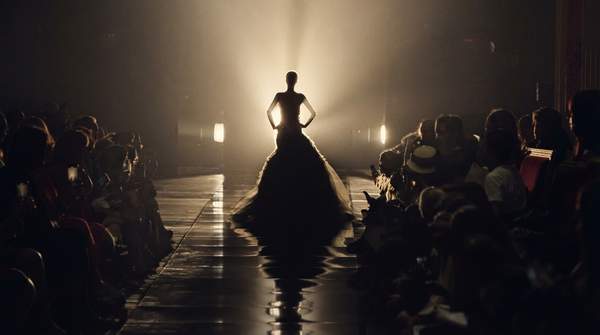
That framing turns every staging decision into a trade-off. A grand spectacle broadcasts prestige but flattens detail; an intimate format reveals the hand-stitching but reaches far fewer eyes. Fashion Week Online also observes that recent developments have accelerated digital presentations and experimentation with NFTs and digital-only couture, so the strategic canvas now includes a fourth, virtual quadrant. The four formats that follow should be read as strategic positions on that canvas—not merely as production styles. The distinction between the historical salon and the modern intimate presentation is, I should note, partly inferred from the evolution of formats rather than a distinction every source draws explicitly; the two are treated here as historical precursor and contemporary descendant of the same close-viewing impulse.
Traditional Salon: Intimacy and Craftsmanship Up Close
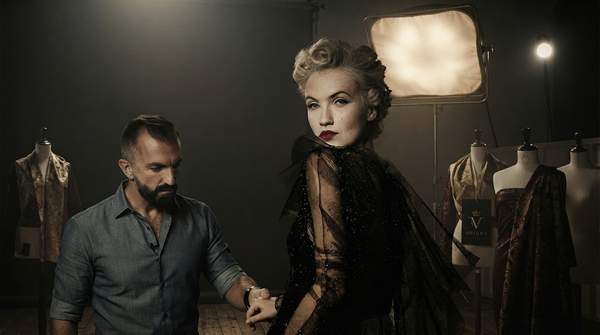
The salon is couture's original grammar: garments shown directly to a select, often client-based audience, in rooms where proximity is the whole point. Fashion Week Online emphasizes the select guest list and personal experience characteristic of couture showings, and from that historical context we can infer the salon's core qualities—a highly personal interaction in which the garment's movement and fit can be appreciated directly, and a brand narrative delivered face to face rather than through a camera pit.
What the salon sacrifices is scale. Danika Daly's account of classic runway-versus-presentation trade-offs notes that runway-style formats accommodate fewer guests because everyone watches simultaneously in finite space—a constraint the salon shares in even more concentrated form. But concentration is also the salon's strategic advantage: the audience that matters most, the clients and connoisseurs who understand what a hand-finished seam costs, is precisely the audience granted the closest look. In a business with 4,000 potential buyers, intimacy is not a limitation; it is targeting.