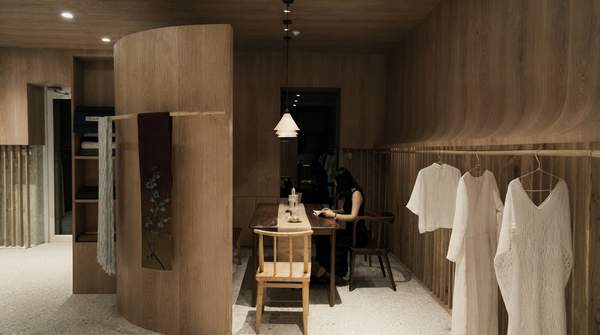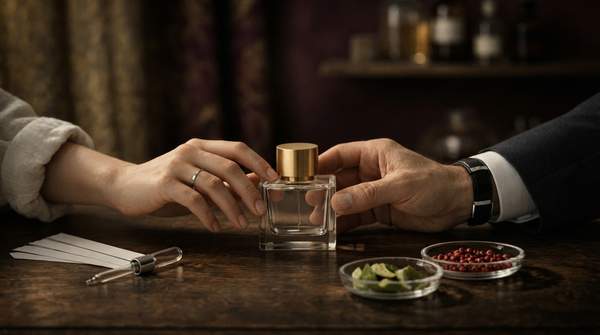
Métiers d'Art — literally "crafts of art" — are the small, specialized ateliers whose master artisans hand-craft the feathers, embroideries, buttons, jewelry, gloves and headwear that make haute couture possible. In the Paris suburb of Pantin, a complex of bright new ateliers houses some of Paris's oldest and most venerable of these craftspeople, many of whom once worked directly with Coco Chanel herself, as France Today has reported. Today, luxury groups such as Chanel and LVMH acquire and shelter these workshops not as patronage but as strategy: to preserve irreplaceable know-how and to keep contemporary collections supplied with skills no factory can replicate.
The Strategic Imperative: Why Luxury Houses Invest in Craftsmanship
Chanel's involvement with the métiers d'art began, according to France Today's reporting, in 1977, when the house started "slowly and discreetly acquiring Paris's small, traditional companies" — a program the magazine characterizes as driven not by charity or prescience but by "self-interest and survival." The arithmetic is unforgiving: when a small atelier loses its successor or its aging owner decides to sell, the loss of the artisans — the petites mains — and even their traditional tools means the loss of an irreplaceable know-how.
The economic stakes extend well beyond a single house. France Today notes that many luxury houses commission the same ateliers for their collections, including Louis Vuitton, Dior, Givenchy and Valentino, so the disappearance of one workshop would ripple across the entire high-end sector. Chanel's acquisitions, in this reading, secured a shared supply chain for fine couture while solving the succession problems that threatened small family firms.
LVMH has built its own institutional version of the same logic. The group's Métiers d'Art division describes itself as standing "at the crossroads where enduring heritage meets dynamic progress, where artisanal mastery unites with imaginative creation, where the finest makers join hands with the most esteemed Maisons." Its scale, as presented by the company, is substantial: seventeen métiers, two innovation centers, operations across five continents, and roughly four thousand people, under CEO Matteo de Rosa.
The conglomerate frames its mission in explicitly dual terms — "defined by excellence, driven by innovation" — and organizes its work around five stated pillars: sustainable farming, tanning of leather and exotic leather, detailed metal work production, precious fibers and textiles manufacturing, and what it calls relentless innovation. Where Chanel's model concentrates on storied Parisian ateliers, LVMH's extends the métiers d'art concept into materials production and research, suggesting that craft preservation and industrial-scale supply can be managed as one enterprise.
Key Métiers d'Art Ateliers and Their Signature Contributions
Chanel, which presents its workshops as Maisons d'art, offers the most detailed public catalogue of the individual disciplines. Each atelier contributes a distinct technique to a finished couture garment, and several have now been part of the group for decades: Goossens joined Chanel's Fashion Métiers d'Art in 2005, and Lesage has been reinventing Chanel's signature tweed since 1998, blending woollen yarns with what the house calls "the most unexpected materials."
The table below compares the principal disciplines as described by Chanel and by journalistic reporting, showing what each craft actually does and the atelier most closely associated with it.
Comparative Guide to Key Métiers d'Art
| Craft Category | Specialized Skill | Named Atelier | Contribution to Fashion |
|---|---|---|---|
| Feather and flower work | Crafting intricate feather arrangements and fabric flowers | Lemarié | Blooming flowers and fringed feather work for the Métiers d'Art 2026 collection |
| Embroidery and tweed | Stitch-by-stitch work with threads, pearls and sequins; reinventing tweed with unexpected materials | Lesage | Sumptuous embroidered patterns and reimagined Chanel tweed since 1998 |
| Goldsmithing | Designing and producing jewelry and ornamental pieces | Goossens | Deers, hummingbirds and dalmatians crafted for the Métiers d'Art 2026 collection; joined Chanel in 2005 |
| Millinery | Carving hat shapes from wood, fabric stretching, molding and shaping materials | Maison Michel | Custom hats and headwear for couture collections |
| Shoemaking | Creating custom footwear for haute couture | Massaro | Bespoke shoes for couture houses |
What the comparison makes visible is the narrowness of each specialization: milliners at Maison Michel carve hat shapes from wood and stretch and mold fabric, while embroiderers at Lesage turn threads, pearls and sequins into finished embellishments through hours of meticulous handwork. Chanel credits Lesage as both "heir to unique savoir-faire and inventor of new techniques" — a formulation that captures the dual identity these ateliers must sustain. The 2026 Métiers d'Art collection, as Chanel presents it, shows the disciplines in active use, from Goossens's sculpted animals to Lemarié's fringed feathers.
Preserving Heritage, Fostering Innovation
The defining tension of the métiers d'art is that preservation alone is not the goal. LVMH's five pillars pair traditional categories — tanning, metal work, precious fibers — with "relentless innovation," and the group operates two dedicated innovation centers alongside its seventeen métiers. The company's own language positions craftsmanship as forward-looking: "For those with an outstanding past, we offer an enduring future."
Chanel's ateliers tell the same story at the level of technique. Lesage's post-1998 work on tweed, blending woollen yarns with unconventional materials, is reinvention rather than reproduction, and Chanel describes Goossens's technical savoir-faire as continuing "to respond to CHANEL's imagination" — a dialogue between goldsmithing and contemporary design rather than a museum practice. The 2026 collection pieces, with their hummingbirds and fringed feathers, are the visible output of that exchange.
The synthesis across both groups suggests a coherent model: the houses secure rare skills through acquisition, give small ateliers succession and investment, and then direct those skills toward new collections each season. The implication, drawn from the stated purposes of both Chanel and LVMH, is that these workshops provide distinctiveness and quality that mass production cannot replicate — which is precisely why the groups treat them as strategic assets rather than sentimental ones.
Sustaining Craftsmanship for Future Collections
Luxury fashion houses should continue to strategically invest in and integrate Métiers d'Art ateliers to ensure the preservation of unique heritage skills and to drive innovation in contemporary collections. The evidence for whether that strategy is holding comes in observable form: continued announcements of new Métiers d'Art acquisitions, collaborative collections, and educational initiatives by major luxury groups. The Métiers d'Art collections themselves — such as the 2026 pieces from Goossens and Lemarié — offer the most concrete check, since each season's garments demonstrate whether the feather work, embroidery and goldsmithing are still being practiced at the level the houses describe.