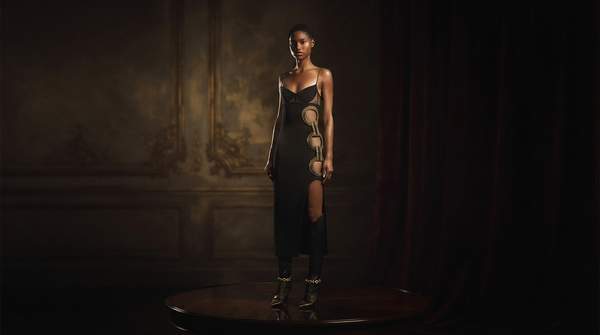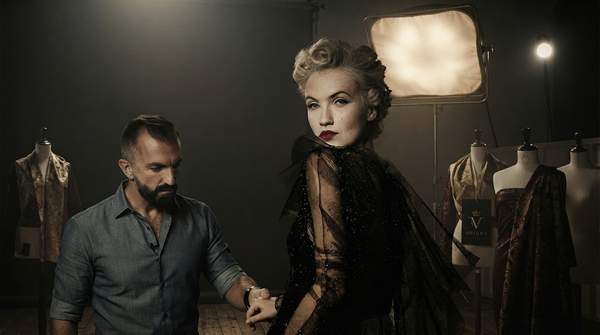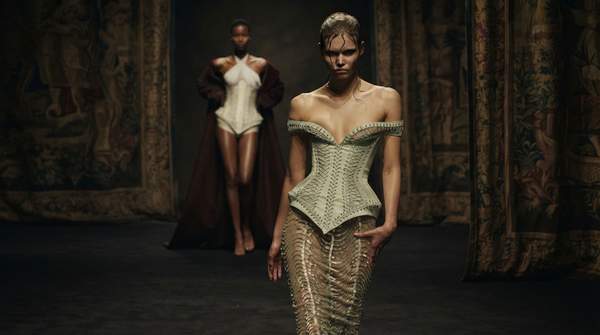
Draping is the oldest way of dressing the body and, paradoxically, one of the most modern tools in high fashion. The technique—shaping fabric directly on a mannequin or live model rather than drafting a flat pattern on paper—began as the primary form of dress in ancient civilizations, where flowing robes and togas were crafted through careful manipulation of cloth. It was re-codified as a specialized artistic method in late 19th- and early 20th-century Paris, where couturiers such as Madeleine Vionnet and Madame Alix Grès turned it into the engine of haute couture's most sculptural garments. Understanding that lineage means understanding what changed at each stage: from unstitched necessity, to formalized atelier craft, to deliberate three-dimensional artistry.
From Ancient Garments to Couture Artistry: The Evolution of Draping
The story of draping is a story of transformation rather than invention. What began as a practical method for clothing the body—wrapping, folding, and pinning uncut cloth—became, over centuries, a sophisticated design discipline practiced in Parisian ateliers. A research paper tracing the origins and development of draping methods describes it as a long-standing fundamental technique that allows practitioners to create intricate, dynamic garments that conform to the human form, evolving alongside broader trends in the fashion industry.
The crucial shift was conceptual. Ancient draped dress worked with fabric in its natural, minimally cut state. Haute couture draping, by contrast, involves precise, three-dimensional fabric manipulation aimed at a specific aesthetic outcome. The Metropolitan Museum of Art's survey of haute couture history, written by Richard Martin and Harold Koda, positions draping among the highly skilled crafts essential to couture production from the formation of the House of Worth in mid-19th-century Paris onward. The technique did not disappear between antiquity and modernity; it was reinterpreted—its ancient principles of direct body-shaping absorbed into a new professional structure.
Ancient Origins: Draping as Primary Dress
In ancient civilizations, draping was not a design technique at all—it was simply how people dressed. Flowing, asymmetrical robes and togas were crafted through the careful manipulation of fabric, with the cloth following the form of the body rather than being cut to fit it. The garment existed in its simplest forms: a draped body cloth used as the main piece of clothing.
Ancient Egypt offers the most suggestive early example. An account presented by Dr. Dalia Abou Elsaoud argues that the class system, as observed throughout history, likely played a role in promoting draped cloth for the rich upper class, including pharaohs and queens. The material itself mattered: linen, a fine fabric prized for its softness, must have allowed the draped cloth to follow the form of the body—creating, in Elsaoud's phrase, "unconsciously the earliest concept of couture." The claim is interpretive rather than documented, but it captures the essential point: the aesthetic dialogue between soft cloth and the human form is as old as refined dress itself.
It is worth noting that draped dress traditions existed far beyond the Western lineage this article traces—Indian draping, for instance, reflects a philosophy of modularity and zero-waste design, with garments that are typically rectangular and minimally cut. Those traditions deserve their own analysis; the focus here is the line of influence that runs into Parisian haute couture.
The Birth of Haute Couture and Draping's Re-emergence
The institutional turning point came in 1858, when the English couturier Charles Frederick Worth established the first haute couture house in Paris, championing exclusive luxury fashion for the upper-class woman and, in doing so, coining the very term "fashion designer"—an artist in lieu of the basic dressmaker. Worth formalized fashion design as an authored, artistic profession, establishing ateliers where skilled workers practiced dressmaking with precision and artistry.
Yet draping was not yet a central, distinct technique in Worth's system. The couture house was customarily composed of two parts—one devoted to dressmaking, the other to the tailoring of suits and coats—with skilled workers practicing the arts apposite to each area. Depending on the designer, the design process might begin either with sketches or with a muslin or toile, draped and cut. Draping was one possible starting point, not yet the defining craft it would become.
The revival of draping as an artistic and technical method emerged strongly in late 19th- and early 20th-century Paris couture, when designers began sculpting fabric directly on mannequins rather than relying solely on flat drafting. The figures who made it definitive were Madeleine Vionnet and Madame Alix Grès. Vionnet, working in the 1920s, revolutionized fashion by using draping to create bias-cut garments that flowed around the body, emphasizing its natural curves. Grès, in the 1930s, became a master of the form, creating sculptural and fluid garments directly on the body, her work characterized by intricate pleating and a deep understanding of fabric manipulation.
According to the historical account of draping's origins, Vionnet and Grès were the first couture designers to devote their talent and time to the art of draping—and designers still look back on their achievements and recreate their techniques today.
Timeline: Draping's Journey from Antiquity to Haute Couture
The chronology below sequences the key developments in draping, linking ancient clothing principles to their specific reinterpretations by named couture designers. Read down the table to trace the continuous line of influence—from uncut cloth on the body, to the formalized atelier, to the sculptural bias cut.
| Era / Period | Key Development / Innovation | Exemplary Garment / Principle | Key Figure(s) |
|---|---|---|---|
| Ancient civilizations | Draping as the primary form of dress; fabric manipulated directly on the body | Flowing, asymmetrical robes and togas; soft linen following the body's form | — |
| Mid-19th century (1858) | Birth of haute couture; fashion design formalized as an artistic profession | Exclusive luxury dress for the upper-class woman; draping not yet a central, distinct technique | Charles Frederick Worth |
| 1920s | Draping revived as a deliberate artistic method; sculpting fabric directly on the mannequin | Bias-cut garments flowing around the body, emphasizing natural curves | Madeleine Vionnet |
| 1930s | Draping refined into sculptural couture craft | Fluid yet structured garments with intricate pleating, created directly on the body | Madame Alix Grès |
| 20th century to present | Moulage codified as a core couture process, distinct from flat pattern-making | White toile draped on the dress form; precision body contouring and innovative cuts | Leading couture houses and ateliers |
The pattern the table reveals is one of continuity with escalation. Each era inherits the same basic principle—cloth shaped in three dimensions on the body—but applies it with greater precision, intention, and artistic ambition than the last.
Moulage: The Couture Draping Process Explained
In French couture, draping is called moulage, a technique that originates from the Paris haute couture maisons. It consists of draping the white toile—a muslin working fabric—directly on the dress form. For symmetrical garments, moulage is done only on the right side of the form. The essential advantage is immediacy: the designer instantly sees how an idea will look in volume, and can easily try new forms.
The contrast with flat pattern-making is the heart of the method. Flat drafting works from measurements translated onto paper; moulage works with the fabric itself, in space. As the fashion resource ModaHow explains, when you drape fabric on the form you can instantly see the garment in volume and easily make alterations—moving the darts, creating more or less ease, cutting the armhole or hemline. The possibilities, in that account, are endless, and the process is described as pleasant and intuitive, which is why designers and patternmakers favor it.
Its uses span the industry. Haute couture and bespoke tailoring brands drape to create unique dresses for particular clients; luxury prêt-à-porter ateliers use it to build prototypes, transforming a designer's sketch into a three-dimensional garment to see how it will look on the body—the French call this the "bien-aller"—before cutting it in the final fabric. Designers also use moulage as a creative search process, looking for new forms and ideas. Most haute couture and prêt-à-porter brands, in other words, use draping at one stage or another of their work.
Artistic Significance: Sculpting with Fabric
Why did draping become so central to couture's identity? The answer lies in what the technique uniquely allows. In the hands of the Paris houses, draping became a refined craft that enabled precision in body contouring, innovation in bias-cut garments, and the creation of fluid yet structured eveningwear. It became associated with luxury, craftsmanship, and bespoke tailoring.
Those three capacities—contour, cut, and the balance of fluidity with structure—define draping's artistic contribution. Because the designer works directly with the fabric, sculpting and adjusting it until the silhouette comes to life, the garment is not a translation of a two-dimensional drawing but a discovery made in three dimensions. Vionnet's bias cut, which lets fabric move diagonally across the body's curves, could scarcely have been perfected on paper; it required cloth on form, observed in volume.
The broader significance, as the research paper on draping's evolution concludes, is that the history of the technique is a rich tapestry of innovation, artistry, and the constant pursuit of new ways to celebrate the human form. Draping gives couture its distinctive visual language: garments that appear to flow from the body itself rather than assembled onto it.
Modern Interpretations and Enduring Legacy
Draping did not end with its 20th-century masters. Today it remains a critical skill for fashion designers, with practitioners continuously pushing the boundaries of what is possible. The lineage that runs from ancient draped robes through Vionnet and Grès continues because the technique's core advantage is permanent: it lets the designer think in volume from the first moment of creation.
The endurance is also institutional. The couture house structure that Worth established—separate dressmaking and tailoring ateliers, with fittings conducted by the designer or a trusted fitter to determine the minute adjustments of a garment to the individual client's size and sense of comfort—still depends on draped toiles as its working medium. Fit, in both its tailored and dressmaking variants, is inevitably part of the value of couture, and draping is how that fit is found.
Draping's Enduring Legacy in Fashion Design
The reader should recognize draping as a foundational and continually evolving artistic technique essential to haute couture's identity—not an antiquarian survival but a living method. Its history is a single unbroken argument: from Egyptian linen unconsciously following the body, to Worth's formalized ateliers, to Vionnet's bias cut and Grès's pleated sculpture, to the moulage practiced in couture houses today.
The measurable indicator of that legacy is the continued use and reinterpretation of direct fabric manipulation on the body by leading couture houses and innovative designers. As long as ateliers drape white muslin on dress forms in search of new silhouettes—moving a dart, easing a seam, finding a form that exists nowhere on paper—the ancient principle of shaping cloth on the body remains the beating heart of high fashion.