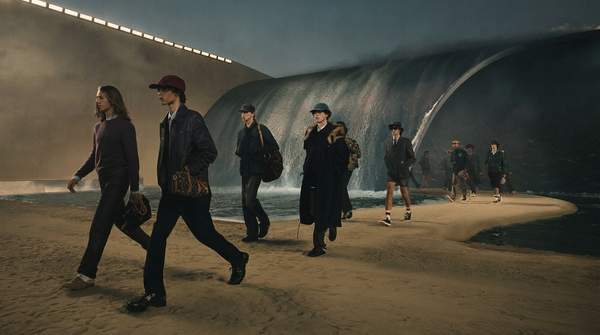
Closing Paris Fashion Week on Tuesday, Nicolas Ghesquière presented a Louis Vuitton Spring/Summer 2027 collection that pivoted from his signature sculptural forms toward a new philosophy of lightness and simplicity. Staged in the Cour Carrée of the Louvre beneath a fleet of suspended, retro-futurist flying cars, the show, titled "Ergonomie," grounded its science-fiction setting with an earthly focus on the human body, delivering what WWD called one of the "breeziest, most approachable" Vuitton collections in years.
The collection’s stated mission, according to show notes reported by Haute Living, was to explore "a notion of design fundamentally shaped by the conditions, capabilities and movement of the human body." This marked a deliberate departure from previous seasons, which often featured imposing, sculptural cloaks. Instead, Ghesquière expressed a desire for "a sensation of simplicity — a quest for purity somehow," as he stated in a preview covered by WWD. The result was a wardrobe that prioritized fluidity and an almost weightless feel, a choice that drew both praise for its wearability and questions about its creative edge.
Deconstructing 'Ergonomie': The Philosophy of Louis Vuitton's SS27 Collection
The design language of Louis Vuitton's Spring/Summer 2027 collection can be understood through its central, officially stated theme of "Ergonomie." This framework, which Numéro reports was conceived as a celebration of ergonomics, breaks down into several core principles that manifested on the runway, ultimately shaping the collection's mixed critical reception.
- Stated Theme: Ergonomics. The collection was built around the concept of design that conforms to the human body. This philosophy, previously explored by the house in relation to designer Pierre Paulin, shifted the focus inward, from the external silhouette to the body moving within the garment.
- Key Aesthetic: Lightness and Movement. Ghesquière’s stated quest for simplicity and fluidity was the collection's most prominent aesthetic feature. Critics noted the "featherweight" quality of the fabrics, which were engineered to feel like almost nothing at all. This was a collection defined by airy, flowing, and gauzy materials that whispered luxury.
- Design Influence: Retro-futurism. While the clothes were grounded in present-day wearability, the show's atmosphere was pure retro-futurist dream. The set, featuring 34 sculptures resembling flying cars hovering over the Louvre courtyard, established a science-fiction context that contrasted with the tangible, body-conscious clothing.
- Resulting Critique: Wearable vs. Unprovocative. The focus on ergonomics produced what Haute Living described as Ghesquière’s "most wearable Vuitton in years." The clothes, from semi-sheer midi dresses to silk skirts, were praised for belonging "firmly in the now," according to ELLE. However, this same approachability led some critics to desire more of the designer's signature provocation.
A Deliberate Shift in Ghesquière's Vision
The Spring/Summer 2027 collection represents a clear and deliberate evolution in Nicolas Ghesquière’s work at Louis Vuitton. Where past seasons often emphasized a powerful, architectural silhouette, this show saw the designer deconstruct that armor in favor of something more fluid and intimate. The show notes explicitly contrasted this new direction with his history of "sculptural cloaks," stating that Ghesquière now "built clothes around the body inside them, not the silhouette outside."
This shift was evident in the specific garments presented. The collection elongated silhouettes with fluid dresses and revamped historical archetypes with a lighter touch. As noted by Numéro, classic frock coats were reimagined in delicate silk chiffon, and jabots ran the length of coats, adding a layer of sophistication without weighing the designs down. The opening looks, described by ELLE, included an airy, paneled midi dress and a flowing V-neck style, setting a tone of ease that persisted throughout the show.
Mixed Critical Reception: Wearability vs. Provocation
The collection’s pivot to approachability drew a divided response from critics, creating a distinct tension between its perceived commercial strength and its creative impact. On one side, the emphasis on wearability was widely seen as a success. The clothes were lauded for their beauty and practicality, with WWD calling the collection one of the "prettiest Vuitton collections in years." This sentiment was echoed by other publications that highlighted how the garments made their case on the body, suggesting a strong retail future.
However, this very accessibility left some observers wanting more of the challenging, forward-thinking design Ghesquière is known for. Haute Living directly reported that "some critics wanted more provocation." This viewpoint suggests a concern that in prioritizing ergonomics and ease, the collection may have sacrificed a degree of the conceptual daring that defines high fashion. While no one disputed the elegance of the clothes, the debate centered on whether this graceful collection pushed the conversation forward with the same force as Ghesquière's previous, more formidable work.
Navigating Louis Vuitton's New Direction
Fashion industry observers and luxury consumers should evaluate the Spring/Summer 2027 collection as a strategic pivot towards enhanced wearability and a refined ergonomic aesthetic, rather than expecting overt provocation. Nicolas Ghesquière’s focus on lightness and the body marks a significant, perhaps more commercially minded, chapter for his tenure at Louis Vuitton. The collection’s success will ultimately be determined not just by its runway reception but by its resonance with clients.
Future sales performance and subsequent critical reviews of Ghesquière's collections will indicate the long-term market acceptance and critical consensus on this design shift. The key question remains whether this new, gentler vision can captivate the brand’s audience as powerfully as his past sculptural statements. The real lift, as one review noted, came from the clothes themselves, and their performance in the seasons to come will be the final verdict.