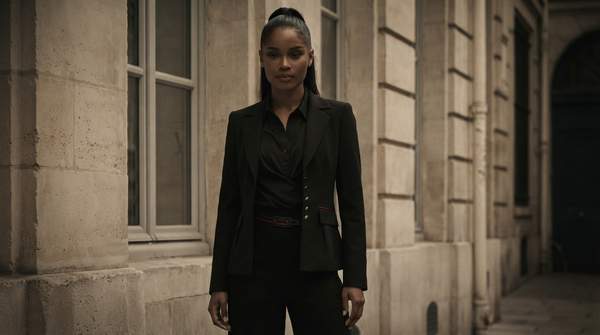
The women's power suit was never just clothing. From Coco Chanel's collarless wool ensemble of the mid-1920s to Giorgio Armani's shoulder-padded corporate armor of the 1980s, the tailored suit traced — and sometimes propelled — women's changing place in public life. Its history, as fashion educator Francesca Sterlacci recounts, begins with women wearing suits "as a symbol of equality and liberation" in the 1920s and culminates, six decades later, in a uniform for executive ambition. Understanding that arc requires two lenses at once: the designers who reshaped the garment, and the fashion theory — Thorstein Veblen's "conspicuous consumption" above all — that explains why a jacket and skirt could signify power at all.
Early Foundations: Liberation and Tailoring (1920s-1930s)
The suit entered women's wardrobes as a declaration. Sterlacci dates the origin story to the 1920s, when women first adopted suits as emblems of equality — a garment borrowed from the male wardrobe and remade as a claim to public presence. The pivotal early design was Chanel's, circa 1925: a collarless jacket in high-quality wool paired with a skirt. Stripped of the era's elaborate ornament, it proposed a new ideal of feminine elegance built on simplicity and precision tailoring rather than decoration.
The 1930s brought the suit to Hollywood. Adrian, the celebrated studio costumer, designed a power suit for Joan Crawford in 1935 — a garment Sterlacci identifies among the first iterations of the form. Here the suit's vocabulary shifted: where Chanel's ensemble suggested liberation through ease, Adrian's designs for the screen emphasized structure and presence, projecting authority through the cut itself. The cinematic setting matters. Before ordinary women wore such suits to offices, they watched stars wear them, absorbing the association between tailoring and command.
The 'Le Smoking' Revolution: Challenging Gender Norms (1960s)
The next decisive move came from Paris. Yves Saint Laurent introduced the female tuxedo — "Le Smoking" — feminizing, as the New-York Historical Society's educational resource on power dressing puts it, "a powerful masculine outfit." The gesture was more radical than Chanel's borrowing of the jacket-and-skirt formula, because the tuxedo was eveningwear's most codified masculine uniform. To place a woman inside it was to argue that the symbols of authority were transferable, not fixed.
The New-York Historical Society frames Saint Laurent's tuxedo as a true symbol of empowerment, and the framing is precise: the suit no longer merely adapted menswear for women but claimed its most formal register outright. Yet the same source records an important limit. These high-fashion designs "were not accessible to most working women"; only "a few wealthy women in powerful positions" could purchase and wear them to work. The tuxedo's revolution was therefore symbolic before it was practical — an image of possibility that preceded broad adoption.
The Corporate Uniform: 1970s and 1980s Power Dressing
By the 1980s the power suit had a workplace to match. Advertising imagery of the period, as documented by the New-York Historical Society, routinely showed models with briefcases in office settings, presenting "a powerful and fashionable professional working woman" as aspirational. The suit had found its stage: the corporation, where women were entering roles that had long been closed to them.
Giorgio Armani is credited by The Style Historian as the pioneer of the power suit proper, and the design formula was unmistakable: padded shoulders, large lapels, oversized tailoring, thick fabrics, bold colors, and statement accessories. The silhouette exaggerated the body's architecture — shoulders widened, lines squared — so that the wearer occupied more visual space. Contemporaries pushed the same vocabulary further: an Azzedine Alaïa black suit with shoulder pads and matching hat, and Claude Montana's pink example, a color whose 1980s revival some historians read, according to the New-York Historical Society, as part of a backlash against the feminist movement. Near the decade's end, The Style Historian notes, tailoring began to soften, and corporate looks grew slimmer through the 2000s as trousers displaced skirts.
Status and Symbolism: The Power Suit as Conspicuous Consumption
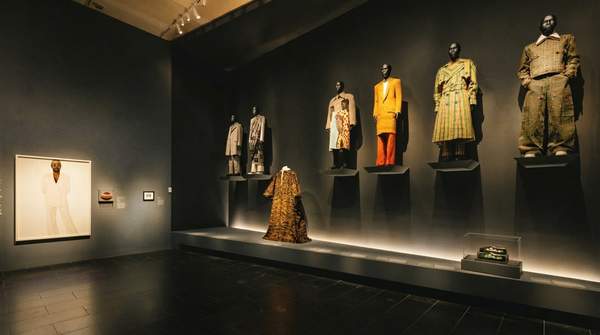
Why did the suit signify power rather than simply professionalism? The Fashion Institute of Technology's exhibition "Power Mode: The Force of Fashion" supplies the theoretical answer. In 1899, Thorstein Veblen laid out his theory of "conspicuous consumption" to describe the performance involved in owning and displaying status goods. Wealth and class, the exhibition argues, are key to understanding status dressing in modern society — as are issues of taste. A power suit worked as Veblen's theory predicts: it displayed resources, signaled membership in a professional class, and performed authority before a word was spoken.
Yet the suit also exposed a paradox the FIT curators identify in contemporary luxury: what they call "accessible luxury," the tension captured by scholars Peter McNeil and Giorgio Reillo's observation that "consumers think that luxury is something that everyone should aspire to." The high-fashion power suits of Alaïa, Montana, and Saint Laurent were elite goods, purchased by few. But as the New-York Historical Society records, they "inspired more affordable styles available at department stores," so that professional women across the United States emulated the look. The power suit thus operated on two tiers simultaneously: rarefied original as status marker, mass-market echo as aspiration — conspicuous consumption radiating downward from the runway to the office park.
The Power Suit's Evolution: A Chronological Timeline
| Era | Key Designer/Figure | Defining Characteristics | Cultural Significance |
|---|---|---|---|
| 1920s | Coco Chanel | Collarless jacket in high-quality wool with matching skirt, circa 1925 | Early iteration of the suit as a symbol of equality and liberation |
| 1930s | Adrian | Structured power suit designed for Joan Crawford, 1935 | Screen-era tailoring projecting authority and presence |
| 1960s | Yves Saint Laurent | "Le Smoking," the female tuxedo | Feminized a masculine outfit; a symbol of empowerment, though accessible mainly to wealthy women |
| 1980s | Giorgio Armani, with Azzedine Alaïa and Claude Montana | Padded shoulders, large lapels, oversized tailoring, thick fabrics, bold colors | Uniform for executive ambition; aspirational image of the successful working woman |
| Late 1980s onward | — | Softer tailoring; slimmer corporate looks; trousers replacing skirts | Power dressing loosens as the corporate uniform evolves |
Read as a sequence, the timeline shows each era answering the last: Chanel's ease, Adrian's structure, Saint Laurent's appropriation of menswear's most formal garment, Armani's exaggerated armor. The suit's meaning shifted from liberation to professional assertion as women's roles moved from seeking entry to exercising authority.
The Enduring Legacy of the Power Suit
The power suit's evolution demonstrates its enduring capacity to reflect and shape women's societal roles, serving as a potent symbol of authority and aspiration. Its history is a Western luxury-fashion story — the sources here trace the couture garment, not its parallel life in other cultures or mass markets — and its symbolic force always outran its accessibility. The measurable indicator of that legacy is visible today: continued reinterpretations of tailored women's wear in luxury fashion collections, and the adoption of such tailoring by women in leadership roles. Watch the runway and the boardroom alike; as long as both keep returning to the shoulder line, the power suit's argument continues.