The tourbillon is a mechanical complication invented by Abraham-Louis Breguet and patented in 1801, designed to compensate for gravitational errors by rotating the escapement and balance wheel within a cage. Its logic is elegant: because a pocket watch held mostly in one position suffers rate deviations as gravity pulls on its balance wheel differently at different orientations, continuously rotating the entire escapement averages those positional errors across a full cycle. Two centuries later, the complication survives not because wristwatches need it for accuracy, but because it has become the most visible demonstration of watchmaking mastery—executed today in three principal forms: the traditional bridged tourbillon, the flying tourbillon, and the multi-axis tourbillon.
Traditional Tourbillon: The Bridged Classic
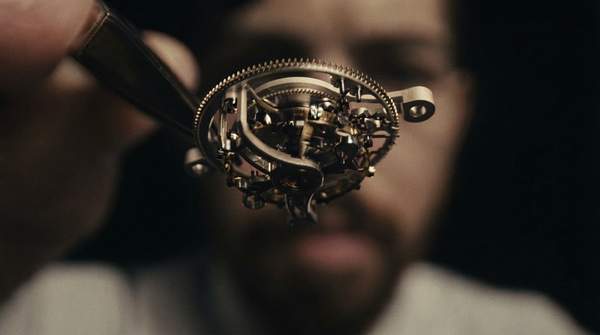
Breguet's original architecture remains the reference point for the entire category. In the traditional construction, the escapement and balance wheel are housed inside a rotating cage that is secured by both an upper and a lower bridge. This dual anchoring gives the cage robust physical support on both sides of its arbor, which is why the design has endured since the early nineteenth century as the classical expression of the complication.
The trade-off is visual. Because the upper bridge spans the cage, it introduces a slight obstruction on the dial side, partially interrupting the view of the rotating mechanism. For collectors who prize classical construction, that bridge is not a defect but an opportunity: it offers additional surfaces for hand finishing and decorative architecture, a point emphasized in collector guidance on choosing between traditional and flying executions. The bridged tourbillon therefore represents the conservative pole of the category—mechanically sturdy, historically faithful, and finished to a degree that the bridge itself becomes part of the display.
It is worth being precise about what the traditional tourbillon does and does not claim. Every tourbillon variation, traditional included, pursues the same objective of averaging positional error; the differences lie in structural support, visual transparency, and case profile. The traditional design simply achieves that objective with the most mechanically conservative means available.
Flying Tourbillon: An Unobstructed View of Mastery
The flying tourbillon removes the upper bridge entirely. Its cage is cantilevered, supported from only one side of its arbor, so the mechanism appears to hover over the movement with nothing above it. Despite being one of the most modern-feeling expressions of the complication, the design is not recent: it dates back to 1920, according to Eric Paul's guide for Ashford.
The single-sided support is what defines the type mechanically, and it is also the type's central compromise. A cage held on one side is inherently more delicate than one anchored at both ends, and watchmakers who integrate a flying tourbillon—particularly in ultra-thin movements—must compress vertical space without compromising the structural integrity of the rotating cage. As the manufacturer Bianchet describes in its own engineering account, that constraint calls for re-engineering: advanced materials, innovative stacking, and revised kinematic principles to keep a cantilevered cage both thin and shock-resistant.
What the design sacrifices in robustness it returns in spectacle. With no bridge crossing above the cage, the rotating escapement and balance wheel are presented with an unobstructed view, which is precisely why the flying tourbillon has become the favored format for open-worked dials where the complication is meant to be watched, not merely possessed. The choice between traditional and flying is thus a choice between classical support and maximum visibility—and, as collector guidance puts it, execution matters more than the category.