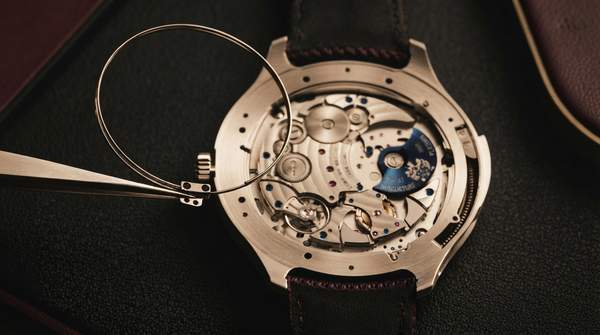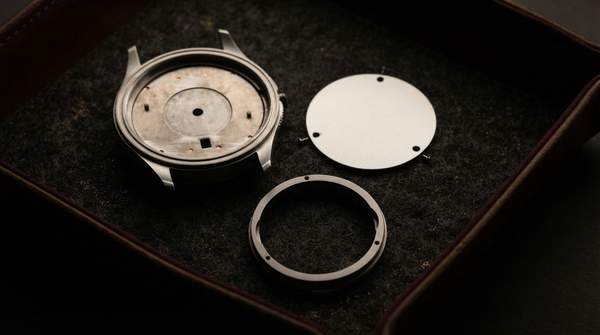
Mechanical watches guard against magnetism in two fundamentally different ways: they either divert the magnetic field around the movement using a high-permeability inner cage, or they build critical components from materials that magnetism simply cannot grip. The older strategy, the soft iron cage, remains in use and remains effective; the newer one, substituting silicon and non-ferrous alloys for steel parts, has largely displaced it in modern watchmaking. Understanding the physics behind each reveals why the industry moved from external protection to internal resilience.
The Silent Threat: How Magnetism Affects Mechanical Watches
A mechanical watch depends on a delicate interplay of steel and alloy parts—above all the balance spring, whose regular oscillation regulates timekeeping. When a watch comes near a magnet, as watch specialist Paul Altieri notes, the consequences range from lost accuracy to the watch stopping altogether. The threat is not exotic: he points out that magnets are now everywhere, from computers to phone cases. Contemporary reporting echoes the scale of everyday exposure—a microwave oven produces a field of only about two gauss at an inch's distance, while power tools reach eight to ten gauss. By comparison, the Rolex Milgauss is built to resist 1,000 gauss and Omega's Aqua Terra more than 15,000, far beyond what ordinary wear demands, which underlines just how much headroom modern designs offer.
Strategy One: Magnetic Shielding with a Soft Iron Cage
The classic answer, dominant in the mid-20th century, was to enclose the entire movement in a container of magnetically permeable material. Jack Forster, writing for The 1916 Company, explains that this typically meant an iron-nickel alloy called mu-metal—the material popularly described as "soft iron"—usually forming an inner case around the movement together with a dial of the same alloy. The poster child of this era was the pilot's watch, built for cockpits full of electrical instrumentation.
The crucial subtlety is that the cage does not block magnetism. As Forster puts it, a soft iron inner case "provides a preferred pathway for magnetic field lines, so the magnetic field flows around the movement rather than flowing through it." Soft iron is easily magnetized, but unlike steel it does not remain magnetized once the source is removed—a property Gear Patrol's Andrew Connor highlights as central to why the material works in this role. The protection relies on diverting the field, not eliminating its presence, and this method was developed specifically to address the accuracy problems magnetic fields caused in professional environments such as aviation and laboratories.