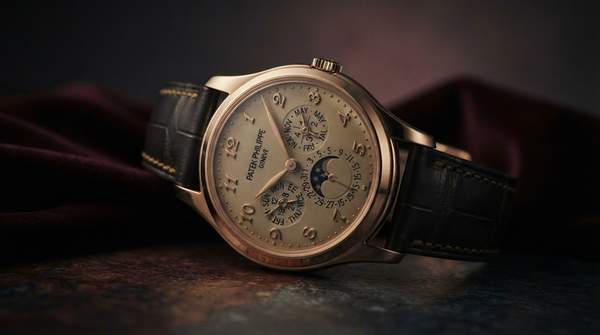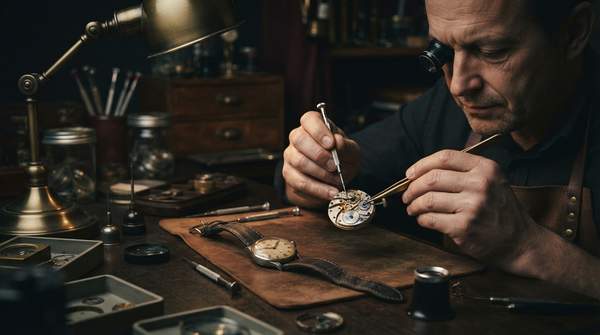
The decision to restore a vintage timepiece presents a fundamental conflict for any owner: the choice between preserving its unique history, complete with the imperfections of age, and reviving its original aesthetic and functional condition. This is not a simple question of repair, but a philosophical one. According to guidance for collectors, where corrosion or deterioration has compromised a watch's appearance and longevity, a "sympathetic restoration" can transform it while remaining faithful to its character. The key is understanding where the balance lies, a judgment that comes from experience.
Serious collectors often prefer watches in completely original, unrestored condition, accepting flaws as part of the timepiece's authentic story. However, ensuring a watch remains a usable, long-lasting instrument often requires intervention. Navigating this choice requires a clear understanding of the different levels of work that can be performed and a component-by-component evaluation of the trade-offs involved.
Understanding the Spectrum of Intervention
The terms for working on a vintage watch are often used interchangeably, but they describe distinct philosophies and levels of intervention. Rather than a simple choice to restore or not, owners can select an approach along a spectrum that ranges from minimal maintenance to a complete overhaul.
At one end is servicing, which is defined as preventative maintenance. In this process, every part of the watch's movement is dismantled, cleaned, inspected, and lubricated before being reassembled, regulated, and tested. The goal is purely functional, aimed at ensuring the watch runs correctly while preserving all original components.
In the middle lies sympathetic restoration. This approach addresses significant flaws that compromise the watch's appearance or longevity but seeks to retain its original character. It is a balanced method, aiming to correct serious deterioration without erasing the signs of a watch's history.
At the other end of the spectrum is full restoration. The objective here is to return the timepiece to its original aesthetic and functional state. This can involve extensive work, from refinishing the case and polishing the crystal to replacing worn or damaged parts in the movement, all to revive the watch's original beauty and performance.
Vintage Watch Restoration Decision Framework
Making an informed decision requires breaking the watch down into its core components and weighing the arguments for preservation against those for restoration. The right choice often differs for the dial, hands, case, and movement, depending on their condition and the owner's goals.
The Dial
The dial is often considered the most important element in determining a vintage watch's character and value. Interventions here are highly consequential.
- The Preservation Argument: Originality is paramount for many serious collectors. Patina, the natural aging of a watch's components, is highly valued because it is authentic and cannot be replicated. One of the most prized forms of this is a "tropical dial," where the original black lacquer on certain models from the 1960s and 1970s has aged into a rich chocolate brown. Similarly, the tritium-based luminous material, or "lume," used before the 1990s often ages to a warm cream or yellow. When the lume on the dial's hour markers and the hands has aged to the same consistent tone, it signals that the components are original and have not been altered.
- The Restoration Argument: In cases of severe deterioration, such as moisture intrusion that leaves rings or spotting, or mold that creates blotches, restoration may be necessary to stabilize the watch and restore its legibility. A sympathetic restoration can address these functional and aesthetic compromises while aiming to remain faithful to the watch's original character.
The Hands
As with the dial, the hands are critical to a watch's authenticity and are a key area of debate.
- The Preservation Argument: Original hands are a crucial element of an authentic vintage watch. According to Noah's Fine Watches & Jewelry, patina only has value if it exists on original components. The consistency of aging between the lume on the hands and the lume on the dial is a key indicator that a watch has not been tampered with, making the original handset invaluable to a collector.
- The Restoration Argument: If the original hands are badly corroded, have lost their lume entirely, or are otherwise damaged, they can detract from the watch's function and appearance. Restoration can involve meticulous work, such as the traditional thermal coloring process that uses cycles of heating and cooling to achieve a deep blue hue. In other cases, replacing worn parts, including the hands, is considered part of the process of returning a watch to its original functional condition.
The Case
The watch case bears the physical history of its use, from minor scratches to significant dents. The debate here centers on whether to erase that history.
- The Preservation Argument: A watch's case tells the story of its life. Over-polishing can soften the sharp, original lines of the case, and some experts express concern that highly technical restoration techniques can make a watch look "too good," erasing its vintage character. The goal for preservationists is to maintain the historical integrity of the timepiece, which includes the wear it has accumulated over decades.
- The Restoration Argument: The goal of a full restoration is to revive the original beauty of the timepiece. This can involve refinishing the case to remove scratches and polishing the crystal to restore clarity. For a watch intended for regular wear, restoring the case can improve its appearance and, in some instances, its structural integrity, helping to protect the delicate movement within.
The Movement
While not visible, the movement is the heart of the watch, and its treatment is essential for longevity and performance.
- The Preservation Argument: For the movement, preservation is achieved through regular, preventative servicing. This involves a complete disassembly, cleaning, inspection, lubrication, and reassembly of all original components. This approach ensures the watch functions correctly and has a long life without replacing historic parts unless absolutely necessary for function.
- The Restoration Argument: A full movement restoration goes beyond standard servicing. It can involve replacing worn components, hand-polishing parts to restore their original finish, and restoring jewel settings, which are critical for both function and visual appeal. This more intensive work aims to return the movement to its optimal performance, ensuring it functions as it did when it was new.
Deciding Your Watch's Future: A Balanced Approach
Ultimately, there is no single correct answer in the debate between preservation and restoration. The right path depends on the watch's condition, its rarity, and, most importantly, your personal philosophy and goals as its custodian. Rather than defaulting to a rigid stance of either full restoration or strict preservation, vintage watch owners should adopt a balanced approach, carefully weighing the historical integrity of each component against its functional needs.
By considering the dial, hands, case, and movement individually, you can make a series of informed choices that honor the timepiece's past while securing its future. The true measure of a successful outcome is the owner's confidence in articulating their chosen intervention level for each watch component and their rationale for that decision.
Sources
- How to Get Your Vintage Watch Serviced, Repaired or Restored: A Collector’s Guide — Vintage Gold Watches
- Talking Vintage Watch Restoration Ethics with James Lamdin, Eric Ku, and Eric Wind - Worn & Wound
- Patina on Vintage Rolex Watches: Flaw or Character? - Langedyk Vintage Watches
- Expert Old Watch Restoration Techniques — Moses Jewelers | The Hidden Gem of San Antonio
- Patina & Originality in Vintage Watches — Noah's Fine Watches & Jewelry
- The Art of Vintage and American Timepiece Restoration for Pocket Watch Conversions — Frett & Co Clockworks