The best movement for your collection is the one that matches your priorities, because no single type wins on every criterion. Quartz delivers the highest raw accuracy—roughly 10 to 15 seconds per month—with only a battery change every few years, but it carries less prestige in traditional collecting circles. Manual and automatic movements offer the artistry and heritage that define luxury horology, at the cost of daily winding or regular wear and servicing every several years. Spring Drive, Seiko's hybrid, threads the needle: mechanical mainspring power with an electronic regulator achieving about one second per day. Here is how the four types compare, and how to choose.
Understanding Watch Movements: The Heart of Your Timepiece
A watch movement, also called a caliber, is the engine that powers a watch and keeps track of time. As watchmaking educators at Rotate Watches explain, there are three main families: mechanical (which splits into manual and automatic), quartz, and Spring Drive. Each pursues the same goal—accuracy—by entirely different means.
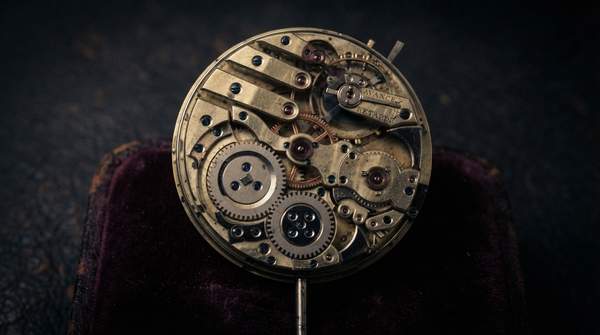
The mechanical movement is the oldest type in horology. As Mark Bernardo explains in his movement guide, it uses a coiled metal mainspring that releases energy as it uncoils through a series of gears, driving an oscillating balance wheel. The balance wheel's oscillations link to an escapement, which periodically releases the gear train to move the hands. Originally the mainspring had to be wound by hand; later, self-winding mechanisms were developed. Quartz, by contrast, dispenses with the spring entirely in favor of a battery and a vibrating crystal—an approach Praesidus's movement guide summarizes as the separate electronic path. When a listing compares "automatic" with "mechanical," it nearly always means automatic versus manual winding.
Manual Wind: The Traditionalist's Choice
A manual-wind movement is powered by a hand-wound mainspring and must be wound regularly to maintain power, as Paul Altieri's movement breakdown for Bob's Watches notes. That is the entire operating principle—and, for many collectors, the entire appeal. The daily ritual of winding, most mechanical owners learn to do it before putting the watch on their wrist, per Nixon's movement guide, creates a direct physical relationship with the mechanism.
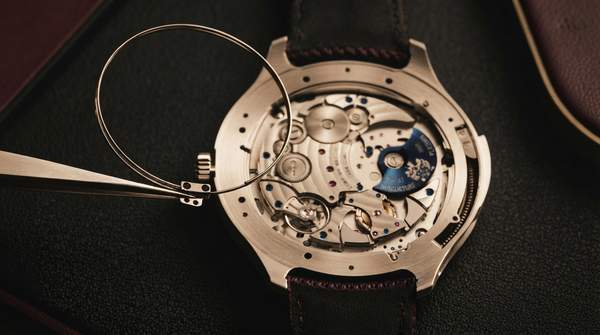
Accuracy is respectable but not exceptional. Brinker's Jewelers places mechanical manual movements at roughly plus or minus 20 to 30 seconds per day, and actual performance varies by caliber and regulation. In return, the manual movement offers advantages its siblings cannot: because there is no winding rotor, the case can be thinner, and the movement leaves room for intricate hand-finishing and complications, which is why high-end watches frequently use manual calibers. Altieri's assessment is that manual-wind is best for heritage, thinness, and connection to the watchmaking craft—the choice for the traditionalist collector.