For horology enthusiasts and collectors, the intricate finishes applied to a watch movement are not merely decorative; they are profound indicators of craftsmanship, historical lineage, and ultimately, a timepiece's value in the collector market. Among the most revered techniques are Côtes de Genève, Anglage, and Perlage, each offering distinct visual characteristics, execution methods, and functional benefits. Understanding these differences allows collectors to appreciate the artistry involved and make informed judgments about a watch's pedigree and desirability.
These finishing techniques, while not directly impacting a watch's timekeeping accuracy, reveal the dedication and skill invested by the watchmaker. They transform functional components into a canvas of subtle beauty, often visible through an exhibition caseback. The quality of their execution, particularly the distinction between hand-applied and machine-assisted processes, directly correlates with a watch's perceived craftsmanship and its appeal to discerning collectors.
Côtes de Genève: The Signature Stripes
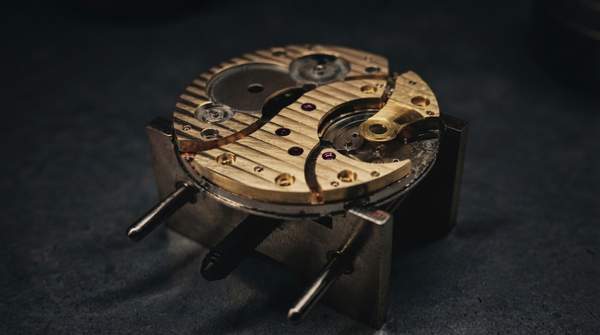
The Côtes de Genève, or Geneva Stripes, is an ornamental finish that emerged in Geneva, Switzerland, during the late 19th century. It quickly became a hallmark of Swiss Made watches and is a requirement for timepieces seeking the prestigious Poinçon de Genève (Geneva Seal) certification, as noted by Cortina Watch. This finish signals a watch's provenance and pedigree, especially when viewed through a transparent caseback.
The technique involves creating a series of perfectly parallel waves or vertical stripes with engraved grooving on the movement's surface. According to Analog:Shift, this is typically achieved with a lathe on premium movements, though mass-produced movements may use elaborate CNC processes. Luxury Time Piece emphasizes that on serious movements, these decorative waves are applied after bridges are shaped, beveled, and polished, ensuring they do not blur the crisp lines of other finishes like anglage. Under magnification, the surface of each stripe should display a fine, even grain, free from chatter marks or abrupt breaks around jewel holes and screw countersinks.
Beyond its aesthetic appeal, Côtes de Genève serves a practical purpose. Analog:Shift explains that, similar to perlage, it helps trap small dust particles, preventing them from interfering with the movement's operation. This dual role of aesthetic enhancement and functional benefit contributes to its enduring presence in haute horlogerie.
Anglage: The Polished Edge of Perfection
Anglage, also known as chamfering, is a highly demanding finishing technique that involves beveling and polishing the edges of movement components. This technique creates sharp, polished edges that catch the light, highlighting the intricate architecture of the movement. Horology Kings identifies anglage as a finish that consistently impresses experts, signifying structural refinement and contributing very high collector value due to its sharp polished edges.
The quality of anglage is particularly evident in its internal angles. Crisp, polished internal angles are a key indicator of high-quality execution, as noted by Luxury Time Piece. The precision required to achieve these sharp, reflective edges, especially on complex components, underscores the skill and time invested by the watchmaker. This meticulous attention to detail on edges that might otherwise appear flat and unfinished elevates the perceived craftsmanship of a timepiece.
While primarily an aesthetic enhancement, anglage also contributes to the overall refinement of the movement. By smoothing and polishing component edges, it can reduce the risk of microscopic burrs or sharp points that could potentially shed debris or interfere with other parts. Its presence signifies a commitment to excellence that extends beyond mere functionality, making it a highly valued characteristic among collectors.
Perlage: The Hypnotic Circles of Craftsmanship
Perlage, or circular graining, is a finishing technique characterized by small, overlapping circles, often referred to as "pearls," created on a metal surface. Outlook Luxe traces Perlage's origins back to the earliest days of watchmaking, noting that it was not a modern flourish but a tradition born from an obsession with beauty and refinement, where artisans treated every component as a canvas. This historical context underscores its significance as a subtle dialect of decoration.
The technique involves a watchmaker applying a rotating tool onto the metal surface to create these distinctive overlapping circles, as described by Camille Oudinot. Perlage is frequently found on movement plates and bridges, and sometimes even on hidden components, rewarding the curious collector who inspects the movement closely. Luxury Time Piece also highlights that perlage on movement plates serves both aesthetic and practical roles, trapping microscopic dust and softening reflections, while also revealing whether the finisher respected the geometry of the components over time.
The application of perlage, particularly when done by hand, signifies considerable value. Outlook Luxe explains that watches featuring hand-applied perlage often command higher prices, not just for the technique itself, but for what it represents: time, skill, and dedication. It functions as a form of authentication, assuring collectors that the watch belongs to a higher tier of craftsmanship and embodies a philosophy of meticulous attention to detail.
Comparative Overview of Movement Finishing Techniques
| Technique Name | Historical Origin/Context | Technical Execution (Hand vs. Machine) | Visual Characteristics | Functional Benefit | Quality Indicator/Collector Value |
|---|---|---|---|---|---|
| Côtes de Genève | Emerged in late 19th century Geneva, Switzerland; hallmark of Swiss Made and Poinçon de Genève requirement. Signals provenance and pedigree. | Creates vertical stripes with engraved grooving; applied after bridges are shaped, beveled, and polished. Surface of each stripe should be uniform. | Perfectly parallel waves or vertical stripes that break cleanly at jewel holes and screw countersinks. | Traps small dust particles, preventing interference with movement operation. | Medium to high; indicates provenance and pedigree, especially when admired through a transparent caseback. |
| Anglage | Structural refinement, consistently impresses experts. | Involves beveling and polishing the edges of movement components. | Sharp, polished edges, particularly on internal angles, which catch the light and highlight the movement's architecture. Crisp, polished internal angles are key. | Structural refinement; can reduce microscopic burrs. | Very high; signifies meticulous craftsmanship and attention to detail. |
| Perlage | Origins trace back to earliest days of watchmaking; a tradition forged in obsession for beauty and refinement. | Creates small, overlapping circles or 'pearls' on a metal surface using a rotating tool. Hand-applied perlage signifies time, skill, and dedication. | Hypnotic, overlapping circles that add texture, depth, and visual intrigue. | Debris control, aesthetics; traps microscopic dust and softens reflections. | High (especially on hidden surfaces); functions as authentication of higher craftsmanship. |
Hand vs. Machine: The Mark of True Craftsmanship and Collector Value
The distinction between hand-applied and machine-assisted finishing is paramount in haute horlogerie, directly impacting a watch's perceived craftsmanship and collector desirability. While techniques like Côtes de Genève can be replicated by CNC processes on mass-produced movements, the execution on premium movements typically involves a lathe, as noted by Analog:Shift. For collectors, the difference lies in the subtle imperfections and unique character that hand-finishing imparts, signaling a higher tier of dedication and skill.
For Perlage, specifically, Outlook Luxe highlights that watches featuring hand-applied perlage often command higher prices. This is not merely due to the technique itself, but because of what it signifies: the considerable time, skill, and dedication of the artisan. Hand-finishing acts as a form of authentication, assuring collectors of the watch's elevated craftsmanship. Collectors invest in the philosophy behind the watch, recognizing that doing something purely for beauty is the ultimate expression of seriousness in haute horlogerie.
The quality of execution, whether hand or machine, is critical. For Côtes de Genève, Luxury Time Piece states that on a serious movement, the decorative waves should never blur the crisp lines of anglage, and the surface of each stripe should show a fine, even grain without chatter marks. Similarly, for anglage, the crispness and polish of internal angles are direct indicators of high-quality execution. These details, often only visible under magnification, are what differentiate true craftsmanship and contribute significantly to a watch's collector value.
A Collector's Eye: Visually Assessing Finishing Quality
For collectors, developing a discerning eye for movement finishing is essential to appreciating craftsmanship and evaluating a watch's true value. Visual assessment, often aided by a loupe, can reveal the quality of Côtes de Genève, Anglage, and Perlage, and help interpret inconsistencies.
When examining Côtes de Genève, look for perfectly parallel waves or stripes. Luxury Time Piece advises that on a high-quality movement, these stripes should be applied after other processes like beveling, ensuring they do not blur the crisp lines of anglage. Under magnification, the surface of each stripe should exhibit a fine, even grain, with no chatter marks or abrupt breaks around jewel holes and screw countersinks. The consistency and cleanliness of these breaks are key indicators.
For Anglage, the focus should be on the edges of components. Rotate the watch slowly under light to observe how each surface catches and releases light, as suggested by Luxury Time Piece. The critical detail is the crispness and polish of internal angles. High-quality anglage will feature sharp, highly reflective bevels, particularly where two surfaces meet at an acute angle. Any rounding, unevenness, or dullness in these areas can indicate a lower standard of finishing.
When assessing Perlage, observe the uniformity and overlap of the small circular patterns. Camille Oudinot describes these as "pearls." High-quality perlage will show consistent, evenly spaced, and perfectly overlapping circles across the entire finished surface. Inconsistencies in size, depth, or spacing, or any signs of tool marks outside the intended pattern, suggest a less meticulous application. The presence of perlage on hidden components, as noted by Outlook Luxe, can also be a sign of exceptional dedication to craftsmanship.
Elevating Your Collection: The Observable Signals of Superior Finishing
Collectors should prioritize movements exhibiting crisp, consistent, and well-defined finishing details, especially in areas like internal angles for Anglage and the uniformity of stripes or circles for Côtes de Genève and Perlage, as these are direct indicators of high craftsmanship and contribute to long-term collector value. Under magnification, look for perfectly parallel Côtes de Genève stripes that break cleanly, sharp and polished internal angles in Anglage, and uniform, overlapping circles in Perlage, particularly on hidden surfaces.
Sources
- The Art of Watch Finishing: Perlage, Geneva Stripes & More — Cortina Watch
- Reading finishing through a loupe: anglage, black polish and what hand work looks like — Luxury Time Piece
- A Guide to Movement Finishing — Analog:Shift
- Luxury watch finishing: what every collector must know — Horology Kings
- Camilleoudinot
- Perlage In Haute Horlogerie: Why Collectors Value This Intricate Movement Finish - Outlook Luxe