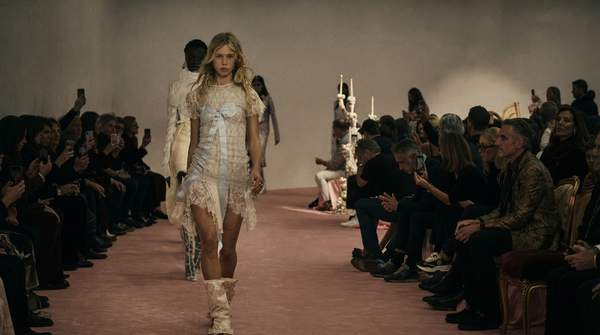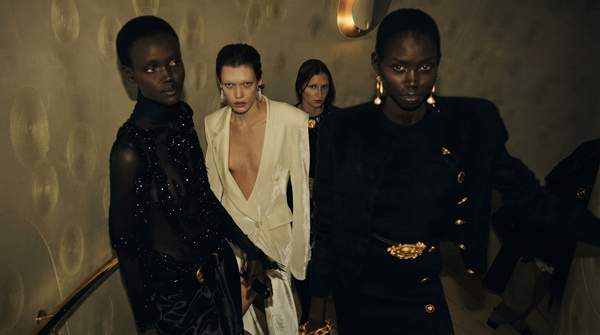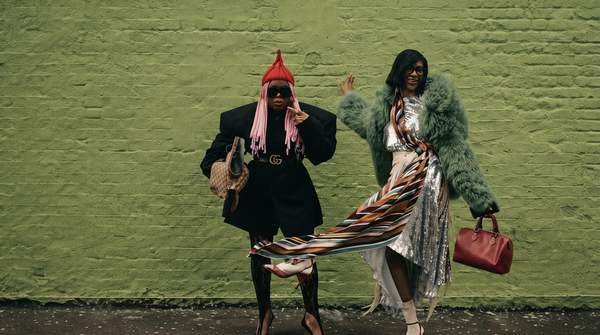
Those immaculately dressed figures circling the entrances of Paris and New York shows? They are not merely well-dressed attendees who happened to catch a photographer's eye. Fashion Week street style has, as one Vogue Business analysis put it, "ballooned into its own industry machine — with money to be made." Understanding who profits, and how, transforms the sidewalk spectacle into something far more interesting: a choreographed economy of visibility, where brands, stylists, influencers, photographers, and publishers trade clothing, content, and exposure.
The Street Style Machine: A Strategic Ecosystem
Street style began innocently enough — a way of documenting who attended shows and what they wore, notes Vogue's Madeleine Schulz. That documentary impulse has since inverted. Photographer Sarah Treacher, who has spent years photographing crowds outside shows in New York, London, Paris, and Milan, describes how the practice became an image economy in its own right, one that increasingly blurs "the line between being caught and dressing to be seen." The photographers themselves, many of whom got their start with Instagram accounts and adjacent blogs, are no longer bystanders but professional operators within the system.
What makes this an ecosystem rather than a free-for-all is that each participant enters with a motivation: a brand seeking exposure, a stylist building a portfolio, an influencer needing content, a publication needing traffic. The following model maps those exchanges explicitly.
The Street Style Ecosystem: A Value Exchange Model
This table deconstructs the phenomenon into its transactional parts. Reading across each row, ask: what does this player contribute, and what flows back? That symmetry is the business logic of the sidewalk.
| Player | Role / Action | Value Provided | Value Received |
|---|---|---|---|
| Brands | Leverage influencers, celebrities, and media to amplify their message during Fashion Week — a key strategy for generating Media Impact Value (MIV®) | Clothing, accessories, showroom access, partnerships | Brand exposure, trend-setting influence, consumer engagement |
| Stylists | Curate outfits for the lens; research looks, make appointments, gather pieces, and watch runway shows and culture to stay current | Coherent visual narratives; online branding and influencer collaborations in the social media age | Portfolio material, professional network of designers and brands, paid styling work |
| Influencers & Celebrities | Attend shows in curated looks, attracting photographers and serving as the human catwalk for brand messages | Reach, aspirational context, credibility | Content, visibility, brand relationships |
| Photographers | Capture street style as professionals, many having built careers from Instagram and blogs | The images themselves — the ecosystem's raw material | Commissions, published galleries, industry standing |
| Media / Publications | Publish daily street style roundups in each Fashion Week city | Distribution; galleries that remain "a big traffic driver" | Audience traffic and advertising attention |
| Consumers | Consume and reinterpret street style imagery | Attention; grassroots adoption of looks | Accessible, relatable fashion; a route into the conversation |
No single player controls the system, which is precisely why it functions: each party's output is another's input, and the loop — brand to stylist to wearer to lens to publication to consumer — closes back at the brand's door.