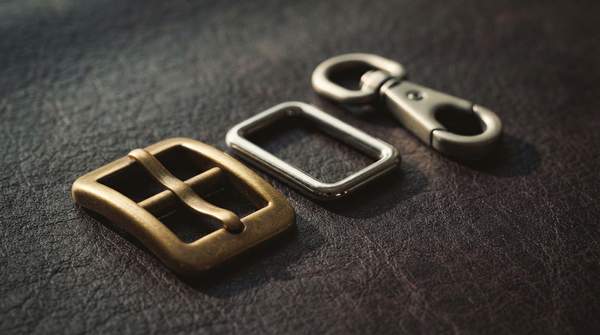
In the realm of luxury handbags, the hardware is far more than a mere functional component; it is, as Ivy Alexander suggests, the "jewelry for your bag," defining its silhouette and contributing significantly to its longevity. The deliberate choice of hardware material profoundly impacts a handbag's perceived value, enduring quality, and overall design integrity, according to SELVANE. But how does one discern true quality amidst a myriad of marketing claims? The answer lies in understanding the material science, craftsmanship, and long-term wear characteristics of the metals commonly employed.
We often find ourselves drawn to the satisfying weight of a turnlock or the buttery glide of a polished zipper, yet the unseen mechanics of these elements are what truly protect our investment. To make informed choices about quality and longevity, it becomes essential to delve into the distinct properties of solid brass, zinc alloy, and stainless steel—the primary contenders for luxury handbag hardware.
Material Properties: Brass, Zinc Alloy, and Stainless Steel
When we consider the foundational elements of handbag hardware, the inherent qualities of each metal dictate its potential for lasting strength and aesthetic retention. Let us examine the core material properties that set solid brass, zinc alloy, and stainless steel apart.
Solid brass, an alloy primarily composed of copper and zinc, typically exhibits a density ranging from 8.4 to 8.7 grams per cubic centimeter, as detailed by Thomasnet and Sincere. This density contributes to its characteristic weight, strength, and durability. Brass is also known for good corrosion resistance, particularly in mild environments, according to Jude Steel and PartMFG. However, it is generally softer than stainless steel, a characteristic that influences its susceptibility to wear.
Zinc alloy, in contrast, is notably lighter than both brass and stainless steel. While this might appeal to designs prioritizing lightness, OYC and Ageless Iron Hardware indicate that it is also softer and inherently less durable than its counterparts. This relative softness is a critical factor in its long-term performance.
Stainless steel stands out for its superior strength and high resistance to corrosion. Its protective qualities are particularly enhanced by a chromium content of 10.5 percent or more, making it suitable for even harsh environments, as PartMFG notes. SELVANE further highlights that high-grade 316L stainless steel can offer 20-30% greater corrosion resistance compared to other materials. Its inherent hardness also positions it as a more robust option against physical wear.
Production Complexity and Cost Implications
The journey from raw material to refined handbag hardware involves intricate processes, each contributing to the final cost and initial aesthetic appeal. The choice of metal significantly influences these manufacturing considerations.
Solid brass, while often associated with luxury, comes with a higher price tag. OYC explains that high-quality brass costs significantly more than zinc alloys in material terms, and its complex processing further elevates the overall cost. Despite this, brass is highly valued for its excellent machinability, a property that makes it easy to work with and shape into intricate designs, as noted by Jude Steel and Thomasnet. Craftsmen can also achieve an antique finish directly on brass through chemical or electrochemical processes, yielding a natural effect, according to OYC.
Zinc alloy, on the other hand, is celebrated for its cost-effectiveness and production efficiency. OYC points out that zinc alloy offers extremely high production efficiency and very low unit costs, making it an ideal choice for large-scale mass production, particularly for brands focused on cost control and rapid design iteration. Furthermore, zinc alloy is highly compatible with electroplating processes, allowing for the consistent application of various popular finishes, such such as gold, gunmetal black, and rose gold, which can appear exquisitely refined at first glance.
While the evidence does not explicitly detail the production complexity and cost of stainless steel relative to brass and zinc alloy in the context of handbag hardware, its inherent hardness, as discussed earlier, generally implies more demanding machining processes compared to the easily workable brass. However, its durability often translates into long-term value.
Long-Term Wear Characteristics and Aesthetic Retention
Beyond initial appearance and cost, the true measure of luxury handbag hardware lies in how it withstands the test of time. How do these materials age, and what can we expect from their long-term wear characteristics?
Solid brass, while durable and resistant to corrosion in mild environments, is softer than stainless steel, making it somewhat more susceptible to dents and scratches over time, as SELVANE and Jude Steel observe. However, brass possesses a unique characteristic: it develops a natural patina with age, a process that many consider desirable, adding character and a vintage appeal to the hardware. OYC notes that this patina can also be polished away to restore the original luster, offering a balance between evolving aesthetics and maintainable brilliance.
Zinc alloy, due to its inherent softness, is generally more susceptible to various forms of wear. Ageless Iron Hardware and OYC highlight that zinc alloy is prone to corrosion, tarnishing, dents, and scratches. This can lead to a noticeable degradation in appearance over time, with cheaper materials wearing out and potentially requiring replacement. The initial refined finish achieved through electroplating on zinc alloy may also be more vulnerable to chipping or fading with prolonged use.
Stainless steel emerges as a champion of long-term durability. Its superior hardness and high corrosion resistance mean it is significantly more resistant to scratches, dents, and tarnishing than both brass and zinc alloy, as SELVANE, PartMFG, and Ageless Iron Hardware attest. Stainless steel is known for maintaining its luster and structural integrity over extended periods, making it a robust choice for hardware that is expected to endure rigorous use without significant aesthetic compromise.
Making an Informed Choice: Balancing Quality and Longevity
The selection of handbag hardware is a declaration of intent from the designer, balancing aesthetic vision with functional demands, as SELVANE aptly puts it. For the discerning consumer, understanding these distinctions is crucial for appreciating true quality and making an informed investment.
If your priority is a traditional luxury aesthetic that develops a unique character over time, solid brass offers a compelling choice. Its satisfying weight and ability to develop a rich patina, while remaining polishable, speak to a classic sense of enduring quality, despite its higher cost and relative softness compared to steel. As OYC notes, its high density also contributes to a heavier bag, which some may perceive as a mark of luxury.
For those seeking a balance of contemporary aesthetics, diverse finishes, and cost-effectiveness, zinc alloy presents a viable option. Its high production efficiency and compatibility with various electroplated finishes allow for a wide range of designs at a lower unit cost, making it prevalent in fashion-forward pieces where unique design is key, according to OYC. However, one must be mindful of its susceptibility to wear and tear over the long term.
Finally, for unparalleled durability, superior resistance to corrosion, scratches, and dents, and a consistent aesthetic that withstands the rigors of daily life, stainless steel stands as the most robust option. While its initial processing might differ, its long-term performance ensures that the hardware maintains its integrity and luster, offering peace of mind for those prioritizing longevity above all else. Ultimately, the "best" material is the one that aligns most closely with your personal values for a handbag's journey through time.
Sources
- 10 Best Handbag Hardware Options for Luxury Enthusiasts — Ivy Alexander NYC, LLC.
- Handbag Closures: Magnetic vs Turn Lock vs Zipper Compared — SELVANE
- Brass: Use, Properties, Types, and Grades — Thomasnet
- Brass vs Stainless Steel: Strength, Corrosion & Long-Term Value - Jude Steel — Jude Steel
- Brass vs Stainless Steel: Comprehensive Comparison — PartMFG
- Stainless Steel vs Brass vs Zinc Alloy: Which is the Best Bag Hardware Material? - OYC — OYC
- Cast Iron vs. Brass vs. Zinc Alloy: Choosing the Right Door Hardware — A Material Guide — Ageless Iron Hardware
- Brass vs. Zinc vs. Stainless Steel: A Hardware Guide — SELVANE