The "It Bag" is not dead, but it has fundamentally changed. What began as a single, dominant handbag defining an entire era—propelled by royalty, film stars, and glossy magazine pages—has given way to a faster, more fragmented cycle in which social media can crown a new object of desire within days, while a parallel "quiet luxury" movement pulls other shoppers toward understated craftsmanship. Understanding this evolution means understanding not just handbag design, but the machinery of celebrity, media, and timing that turns a leather accessory into a cultural event.
The Genesis of the 'It Bag': Precursors and Coining the Term
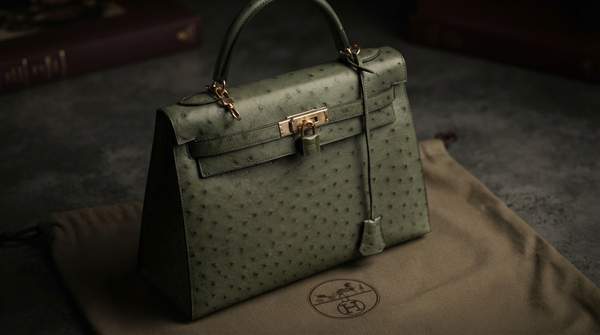
Long before anyone said "It Bag," the phenomenon's ingredients were already assembled. The Hermès Kelly bag took its name from Grace Kelly, who famously used it to shield herself from photographers; the Gucci Jackie, originally a unisex shoulder bag from the 1950s, was renamed around 1961 after the style-setting First Lady who favored it, as Vogue's history of coveted accessories recounts. The Birkin followed in 1984, born—reputedly—of a chance airplane conversation between Jane Birkin and Hermès executive Jean-Louis Dumas about the need for a roomy carryall.
What these precursors established was the template: a distinctive design fused to a compelling famous woman. The term itself, "It Bag," was coined only in the 1990s, when designer handbags consolidated their position as status symbols. Vogue has described these objects as "totemic accessories"—less a practical item than a cultural marker. The exact individual or publication responsible for the first use of the term is not specified in the record, but the 1990s label stuck, and a new commercial era began.
The Golden Age of 'It Bags': Celebrity, Media, and Iconic Designs
If the pre-1990s bags were famous by association, the 1990s and early 2000s made fame the entire point. Two determinants, as Harper's Bazaar's analysis of the phenomenon argues, are indispensable: an innovative design that stands entirely on its own silhouette, and a genuine cultural "moment"—a hit. The Chanel 2.55, Balenciaga's City, Dior's Saddle, and Fendi's Baguette all qualify on the first count; each created a shape that, as the magazine puts it, "truly stand[s] on their own in terms of silhouette."
The second determinant is where the era's media machinery came in. The Fendi Baguette, launched in 1997, became a phenomenon in part through Sex and the City, where Carrie Bradshaw carried the Dior Saddle into millions of living rooms—television doing for handbags what cinema had once done for the Kelly. The Dior Saddle arrived in 1999. This was the peak of the magazine-and-paparazzi cycle: one bag could dominate conversation for seasons, its waiting lists and price hikes themselves becoming news. An It Bag, in the formulation Harper's Bazaar quotes, is "the luxury bag that everyone desires"—and for a few years, desire could genuinely be singular.