High Horology, or Haute Horlogerie, represents the pinnacle of watchmaking, a domain where timepieces transcend their function to become works of mechanical art. This elite category is defined by a masterful combination of three core principles: profound mechanical complexity, the use of exceptional materials, and meticulous, time-intensive artisanal finishing. While many timepieces can be considered luxury goods, High Horology distinguishes itself through a deep commitment to technical achievement and traditional craftsmanship. For collectors and connoisseurs, these details are not just features but the very essence of what makes a watch compelling, transforming it from an accessory into a testament to human ingenuity.
Understanding this highest tier of watchmaking requires moving beyond brand prestige and focusing on the intrinsic qualities of the timepiece itself. The concept can be broken down into a clear framework that allows enthusiasts to identify the hallmarks of this craft. A watch earns its place in this category by demonstrating excellence across its internal engineering, its physical construction, and its aesthetic execution. The synergy of these elements creates a whole far greater than the sum of its parts, embodying a dedication to perfection in every component, whether visible or hidden within the case.
The Three Pillars of High Horology
To systematically identify a work of High Horology, one can evaluate it against three fundamental pillars. This framework helps distinguish these elite timepieces from other luxury watches by focusing on the specific attributes that define this highest level of watchmaking. Each pillar represents a distinct area of mastery that, when combined, elevates a watch to the status of Haute Horlogerie.
| Pillar | Defining Characteristics | Examples |
|---|---|---|
| Mechanical Movements & Complications | The watch is built around a highly developed mechanical movement featuring complex functions beyond basic timekeeping. The architecture and technical achievement of the movement are as important as its precision. | Perpetual calendars, tourbillons, minute repeaters, moon phases, and chronographs. |
| Materials & Construction | The timepiece is constructed from precious or advanced materials, reflecting a commitment to quality, durability, and aesthetic refinement in every aspect of its design. | Cases, dials, and movement components made from precious metals like gold and platinum or innovative modern alloys. |
| Artisanal Finishing & Decorative Arts | Components of the watch, particularly the movement, undergo extensive and meticulous hand-finishing. These decorative techniques require a high level of skill and precision, adding depth and sophistication. | Engraving (cutting into metal) and chasing (pushing metal to create a raised design). |
Pillar 1: Complex Mechanical Movements and Complications
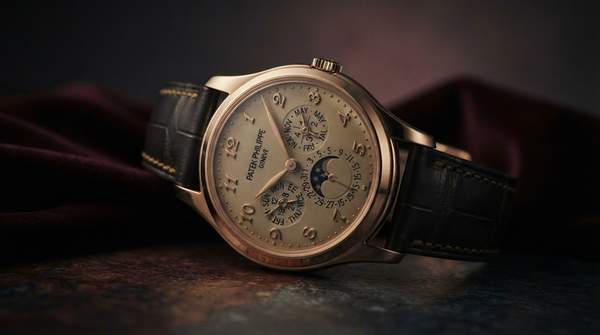
The mechanical heart of a High Horology watch is its movement, which is celebrated not only for its accuracy but for its complexity and ingenuity. This sphere is often defined by the "art of complications," a term for any function a watch performs beyond displaying hours, minutes, and seconds. According to an analysis from Luxury Watch Protection, these intricate mechanisms are a showcase of a watchmaker's technical prowess and a commitment to preserving traditional skills. Complications can range from the astronomical, such as perpetual calendars that automatically adjust for leap years and moon phase displays, to the chronometric, like tourbillons designed to counteract gravity's effect on the movement's delicate regulating organs.
Other notable complications include minute repeaters, which use tiny hammers and gongs to chime the exact time on demand, and chronographs for measuring elapsed time. For experienced collectors, however, the presence of a complication is only part of the story. As the jewelers at Davidson & Licht explain, the movement itself is appreciated for its "architecture, decoration, precision, and technical achievement." This means the layout of the bridges, the elegance of the gear train, and the innovation in its design are all scrutinized and admired. In High Horology, the movement is not merely a functional engine but a miniature mechanical sculpture.
Pillar 2: Precious and Advanced Materials
The second pillar concerns the physical substance of the watch—the materials used in its case, dial, and even parts of its movement. Timepieces at this level are distinguished by the use of precious materials, a characteristic that signifies their value and the maker's commitment to quality in every facet of construction. This choice is central to the "design refinement" that defines high-luxury watches, where the tactile and visual properties of the materials are integral to the ownership experience. The weight of a platinum case or the warm luster of rose gold is not an afterthought but a deliberate part of the watch's intended character.
While traditional precious metals like gold and platinum are hallmarks of this category, the philosophy extends to the use of advanced or difficult-to-work-with modern materials as well. The key principle is a refusal to compromise on quality. Whether traditional or cutting-edge, the materials are chosen for their beauty, durability, and ability to be finished to the highest possible standard. This dedication ensures that the external form of the watch is a worthy vessel for the complex mechanical soul within it.
Pillar 3: Artisanal Finishing and Decorative Arts
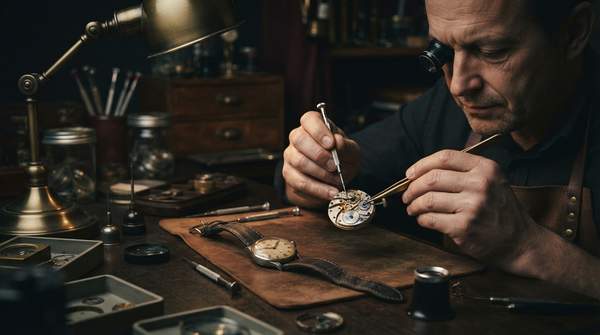
The final and perhaps most subtle pillar of High Horology is the extensive and meticulous finishing applied to every surface of the watch. This process requires "significant time and expertise," transforming industrial metal components into objects of intricate beauty. This dedication to decoration is often most lavishly applied to the movement itself, with many surfaces polished and embellished by hand, even those that will remain hidden from view once the watch is assembled. This practice underscores a philosophy of perfection for its own sake, a core tenet of the craft.
Among the many decorative arts employed are engraving and chasing, two techniques that, according to the watchmaker Reservoir, are often used in tandem. Engraving is a subtractive process that involves cutting into the metal to create a design. Chasing, by contrast, is a formative process that involves pushing the metal to create a raised, three-dimensional relief. Reservoir notes that specific methods like "line chasing" can create complex geometric patterns, while "relief chasing" produces a design that appears to "pop out" from the surface, adding depth and texture. The combination of these and other techniques is a "testament to the craftsmanship" involved, adding a layer of sophistication that is a defining feature of a true High Horology timepiece.
Identifying High Horology: A Collector's Guide
To identify a High Horology timepiece, assess its mechanical complexity, the quality and type of materials used, and the intricacy and artistry of its finishing techniques. While many luxury watches may excel in one of these domains, a genuine work of Haute Horlogerie demonstrates a masterful and harmonious integration of all three. A watch that pairs a novel complication with a precious metal case and features extensive, hand-applied decoration on its movement is a clear example of this esteemed category.
The presence of multiple complex complications, precious metals or advanced alloys, and visible, intricate hand-finishing details on the movement and case serves as a reliable indicator. By evaluating a timepiece against these three pillars—its mechanical soul, its material form, and its artistic finish—an enthusiast can confidently distinguish the true pinnacle of watchmaking from the broader luxury market.
Sources
- The fascinating history of luxury watches - Luxury Watch Protection
- Watches Explained: Levels by Davidson & Licht — Davidsonandlicht
- The Art of Detail : Guide to Chasing in Luxury Watchmaking. — RESERVOIR watch - Luxury swissmade watches inspired by measuring instruments