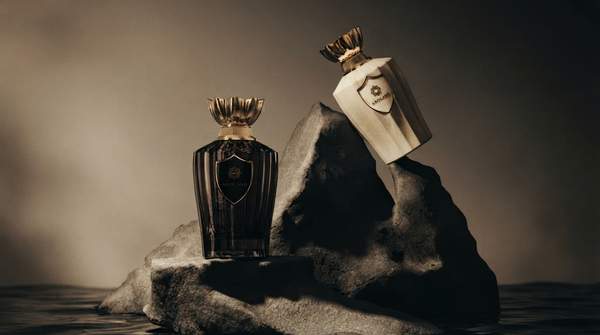
If you want a scent that whispers close to the skin for twelve hours, reach for an Extrait de Parfum; if you want a bright trail that refreshes and disappears, an Eau fraîche or Cologne will serve you better. That, in essence, is the whole game: fragrance concentration—the share of perfume oil dissolved in the alcohol base—largely sets how long a scent lasts and how far it travels. But the categories are guides, not statutes, and the discerning wearer should understand both their typical ranges and their limits.
Introduction: The Essence of Fragrance Concentration
What separates an Extrait from an Eau de Toilette is, at bottom, chemistry's most prosaic metric: a ratio. As fragrance writer Rudi Bedy explains for L'ATELIERO, the different types are distinguished mainly by the mixing ratio of water, alcohol and fragrance oils, and that ratio shapes three things—how long a fragrance lasts, how intensely it is perceived, and how its top, heart and base notes unfold on the skin and in the air. The rungs of the ladder are familiar: eau fraîche at the lightest end, then Cologne, eau de toilette, eau de parfum, and extrait de parfum at the strongest.
One caution before the numbers. Industry commentary is consistent that these ranges overlap and are not universally fixed. As Les Soeurs de Noé's Nadia Benaisa puts it, there is "no universal percentage that every fragrance house must follow"—Eau de Parfum, for instance, is commonly cited around the 10–20% range, and the categories should be understood as useful labels rather than fixed technical standards. The figures below are typical guide values; individual formulas vary by brand.
It also helps to keep three terms distinct, since they are often sloppily conflated. Longevity is how long the fragrance remains perceptible; projection is how far it is noticeable from the wearer; sillage is the scent trail left as someone moves. A perfume can last for many hours while staying intimate—concentration buys endurance more reliably than it buys volume.
Comparing Fragrance Concentration Levels: Your Guide to Longevity and Sillage
The trade-offs become clear once you line the categories up. Higher concentrations, like the 15–20% typically found in Eau de Parfum or the 20–40% in Parfum, offer a more enduring scent trail—Scento's editorial team reports anywhere from 6 to 24 hours depending on formulation—while lighter options such as Eau de Toilette, at 5–15% fragrance concentration, tend to evaporate faster due to their higher alcohol content, usually lasting around 3–5 hours. Notably, the sources diverge slightly on where each boundary sits: L'ATELIERO cites EDP at roughly 14% (up to about 17%), EDT at up to about 10%, and Cologne at up to about 5%—a reminder that these are reconciled consensus ranges, not decrees.