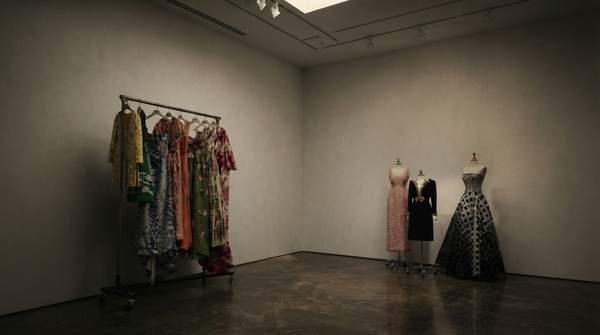
When a heritage house decides to lift its garments from warehouse to plinth, it faces a deceptively simple question: how should the archive be told? Three curatorial strategies dominate contemporary practice—the chronological narrative that traces a brand's evolution, the thematic exploration that organizes objects around concepts, and the immersive digital experience that invites non-linear, interactive engagement. Each carries distinct implications for storytelling, audience engagement, and heritage preservation, and the right choice depends less on prestige than on what your archive can actually say. What follows is a working framework for making that decision.
The Strategic Value of Luxury Brand Archives
Why exhibit an archive at all? In a field where, as Elena Pozzi of ARTE Generali Italia puts it, "ephemerality is the rule and change is constant," the archive functions as a fixed point—"a tangible memory that tells the story, evolution, and identity of a brand, an era, a culture." Brands are increasingly rediscovering that past and sharing it through exhibitions, museum displays, foundations, and digitally communicated archives.
The exhibition itself has become strategic currency. Writing for the design consultancy Matter Of Form, Hannah Wilks observes that as heritage houses step into museums, exhibition becomes "a way to consolidate legacy, elevate craft and shape perception over time"—fashion reframing itself as cultural artefact rather than seasonal product. Fashion commentator Giada Graziano, meanwhile, has tracked the industry's inward turn toward "archival luxury," with brands slowing down and remembering what made them desirable. The archive, in other words, is no longer a warehouse; it is a narrative asset waiting for a curatorial structure.
Chronological Narratives: Tracing a Brand's Legacy
The chronological approach is the most traditional and, for heritage-heavy houses, the most intuitive: a linear progression of events, designs, and brand evolution presented along a timeline. Curatorial scholars Angelica Vandi and Judith Clark, writing on technology-enhanced fashion curation, note that exhibitions frequently incorporate "a chronological or historical timeline to present concepts," a diachronic temporality that guides visitors through a structured historical journey.
The method is often guided by the availability of objects and their ability to convey cultural value—the exhibition space, as Pozzi describes it, celebrates "the stylistic evolution of the brand." Archive creation itself frequently stems from this historical awareness: sometimes the designer wishes to preserve a creative legacy (Gianfranco Ferré, the Azzedine Alaïa Foundation), sometimes management recognizes the narrative value of garments stored in warehouses. Engagement here is primarily educational, focused on historical understanding, and the preservation payoff is the reinforcement of the brand's foundational timeline and identity.