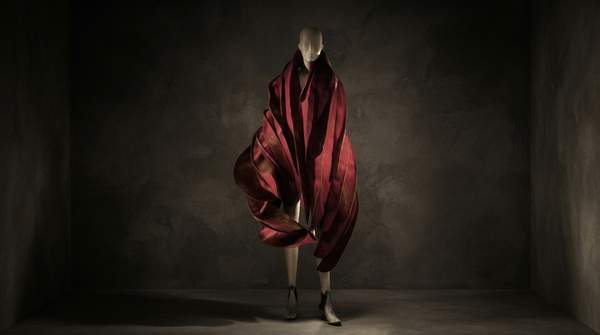
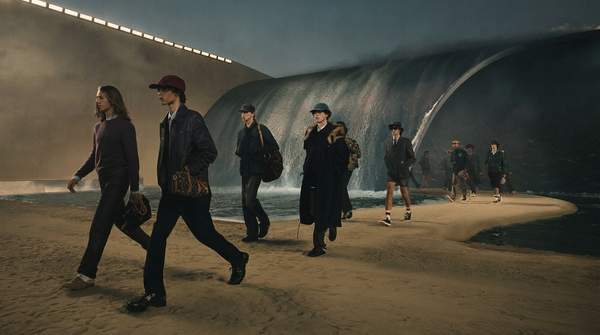
In a stark departure from tradition, Alexis Mabille recently unveiled an entire haute couture collection designed by artificial intelligence and showcased on virtual models, marking a significant moment in the discussion of haute couture's artistic boundaries. Alexis Mabille's digital presentation challenges the long-held expectations of physical craftsmanship, introducing a novel dimension to fashion notions in 2026.
Haute couture is traditionally defined by meticulous hand-craftsmanship, an intricate process demanding countless hours of human skill, but now some collections are entirely generated by artificial intelligence and presented virtually. The generation of collections by artificial intelligence and virtual presentation creates a fundamental tension, questioning whether the essence of couture lies in its tangible creation or its conceptual design.
The industry is poised to redefine what constitutes 'couture,' potentially blurring the lines between digital artistry and physical garment creation, challenging its very foundations. The strategic integration of AI, rather than supplanting human artistry, paradoxically elevates and re-contextualizes the meticulous craftsmanship defining couture's core, thus establishing a new benchmark for its very meaning.
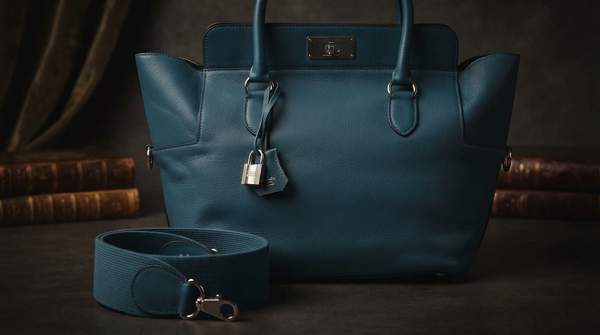
Even as digital innovation grabs headlines, the enduring value of haute couture remains anchored in its irreplaceable human artistry and the tangible stories woven into each piece. Matthieu Blazy, for instance, leads Chanel's couture shows, a house synonymous with enduring craft. The meticulous detail of the Loewe Puzzle bag, constructed from 75 pieces of leather and inspired by origami, confirms that true innovation in core luxury products still relies heavily on complex, tangible craftsmanship, contrasting sharply with the rapid, conceptual nature of AI-driven design according to fashionphile. Matthieu Blazy's leadership at Chanel and the Loewe Puzzle bag reveal how established brands re-imagine foundational elements and design processes to push boundaries within traditional frameworks.
Sculpting New Realities: Artistic and Material Innovation
Jonathan Anderson's Spring 2025 collection featured floral chiffon gowns with circular crinolines and 'concert tees' made entirely out of feathers, demonstrating a clear intent to push traditional material boundaries. Designers are subverting traditional forms to inject irony and contemporary relevance, proving that haute couture's future is as much about conceptual audacity as it is about technical skill, according to Harper's Bazaar Singapore. Nature was a key theme, with elements like guipure resembling magic beans and embroidery like climbing ivy, referencing fairy tales such as 'Jack and the Beanstalk'. Jonathan Anderson's Spring 2025 collection's applications of unexpected materials and narrative depth redefine couture's aesthetic and narrative possibilities.
Chanel's Quiet Revolution: Evolving Heritage
The collection from Chanel featured traditional elements like tweed, but with updated silhouettes such as elongated jackets and skirts with daring slits. Classic Chanel skirt suits were renewed in salt and pepper tweeds with tassel embroideries or fringing, as detailed by Vogue. Chanel demonstrates that profound evolution in haute couture can be achieved through sophisticated reinterpretation of iconic codes, balancing heritage with contemporary allure. Chanel's approach contrasts with more radical departures, illustrating that innovation can also manifest through refinement and subtle re-contextualization rather than outright invention.
The Digital Frontier: AI and Virtual Couture
Alexis Mabille presented an entirely AI-generated haute couture collection, based on his own designs, which was showcased on virtual models, as reported by Monocle. The emergence of AI-generated and virtually presented collections fundamentally questions the necessity of physical garments and human handcraft in defining haute couture. Haute couture is not merely adopting technology; it actively employs it to provoke a re-evaluation of 'craft' and 'luxury' in an increasingly digital world. This paradigm shift suggests a future where the intellectual property of design, rather than its physical manifestation, could become the ultimate luxury commodity.
The Future of Couture: Balancing Dream and Reality
Matthieu Blazy's Chanel Haute Couture Fall/Winter 2026 collection aimed to balance dreamlike escapism with the quiet confidence of modern couture, highlighting a crucial direction for the industry. The industry's path forward will likely involve a delicate equilibrium between fantastical artistic expression and the grounded confidence of wearable, yet innovative, design. The industry's path forward suggests that while digital provocations push conceptual boundaries, the core appeal of couture will continue to reside in its ability to offer tangible, narrative-rich experiences.
What are the key trends in haute couture for 2026?
Beyond AI integration and conceptual subversion, 2026 haute couture emphasizes sustainable practices and a renewed focus on artisanal techniques that incorporate recycled or upcycled luxury materials. Collections often feature multi-functional garments, designed for versatility and longevity, reflecting a broader shift towards conscious consumption within the high-fashion sphere.
How is haute couture evolving artistically?
Artistically, haute couture is evolving by embracing interdisciplinary collaborations with digital artists and architects, moving beyond traditional textile arts. Designers are experimenting with augmented reality elements in runway shows and creating bespoke digital filters to accompany physical garments, extending the artistic experience into the virtual realm.
Who are the leading designers pushing boundaries in haute couture 2026?
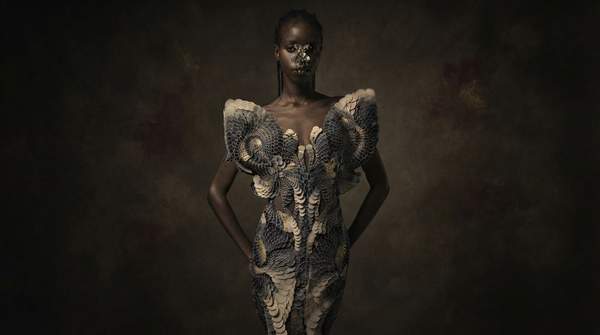
While Alexis Mabille challenges definitions with AI, other designers like Iris van Herpen continue to innovate through biomimicry and 3D printing, creating sculptural forms that blur the lines between fashion and fine art. Furthermore, smaller, independent ateliers are gaining prominence by hand-crafting intricate pieces that blend ancient textile traditions with cutting-edge material science, offering a counterpoint to mass-produced luxury.
Haute couture's future trajectory, if it is to retain its cultural cachet, will likely hinge on its capacity to integrate digital innovation as a conceptual challenge, rather than a mere replacement, for the irreplaceable human artistry that has historically defined its very essence.