Quiet luxury has outgrown its original formula. What began as a rejection of logos and flashy status signaling has matured into a more intricate brand strategy, one that blends heritage with modernity, embeds sustainability in the value proposition, and balances discretion with deliberate statement-making. For brand strategists, the practical question is no longer whether to be quiet or loud, but how to navigate the trade-offs among exclusivity, growth, and consumers' changing values. A comparison of academic research and recent market analysis shows a trend that is evolving rather than fading.
The Genesis of Quiet Luxury: Understated Elegance and Exclusivity
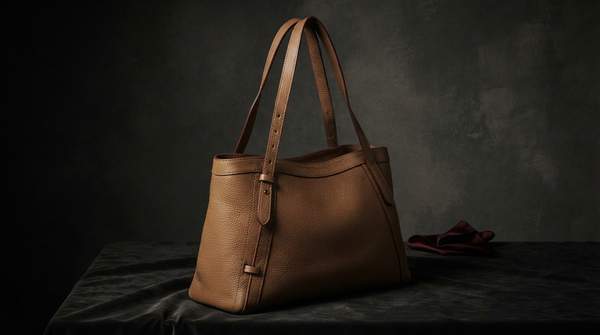
In its initial form, quiet luxury represented a deliberate turn away from conspicuous consumption. Academic research on the phenomenon describes it as a shift in the meaning of luxury "from conspicuous status symbols toward a more subtle, elegant, and intrinsically quality-oriented form of luxury." The signal moved from the label to the material: status was communicated implicitly through craftsmanship and design rather than overt branding.
The mindset underlying this shift is rooted in security. Accounts of the term's history trace the practice of understated dressing to wealthy elites in late 18th- and early 19th-century Europe and America, who adopted restrained clothing and interiors to distinguish themselves from ostentatious courtly styles. Consumers whose standing is secure from birth, the conventional account holds, have a lower need for status signaling and gravitate toward quiet brands.
Commentary in the luxury trade press framed the modern revival in similar psychological terms. Writing in Jing Daily in November 2023, luxury strategist Daniel Langer argued that quiet luxury is "more than a trend; it's a reflection of a changing consumer mindset that values subtlety, authenticity, and a deeper connection to products." The emphasis on quality also carries a sustainability implication from the start: an investment in long-lasting pieces rather than transient fashion cycles encourages more thoughtful purchasing, and while it may reduce purchase frequency, it can foster durable brand loyalty.
Beyond Minimalism: The Evolution of Quiet Luxury Strategy
The contemporary phase looks different. Affluent Research's February 2025 analysis of the luxury market's "next chapter" argues that the market is moving "beyond the binary of 'quiet vs. loud luxury.'" Today's high-end consumers, it finds, seek a balance of heritage and modernity, discretion and statement-making, sustainability and indulgence simultaneously rather than choosing one pole.
The most consequential change is in what consumers expect a brand to stand for. Longevity, durability, and ethical production are now expected elements of a brand's heritage story, and sustainability has become the third most influential factor in luxury purchases, behind quality and experiential value. The report's key takeaway is blunt: the 2025 luxury consumer "demands sustainability—not as a trend, but as an expectation."
Brand positioning reflects the fusion. Affluent Research cites Prada's structured neutrals and Bottega Veneta's sculptural tailoring as embodying a hybrid of quiet and bold luxury—designs that retain restraint in palette and construction while making a visible statement in silhouette. The report also observes that luxury brands are expanding their definitions of exclusivity itself to accommodate these shifting consumer priorities, with exclusivity increasingly measured by effectiveness—refined value propositions, integrated digital innovation, and anticipation of high-net-worth consumers' evolving desires—rather than rarity alone. The academic research reaches a compatible conclusion: quiet luxury is not merely an aesthetic trend but an adaptive branding strategy relevant to the contemporary premium market.