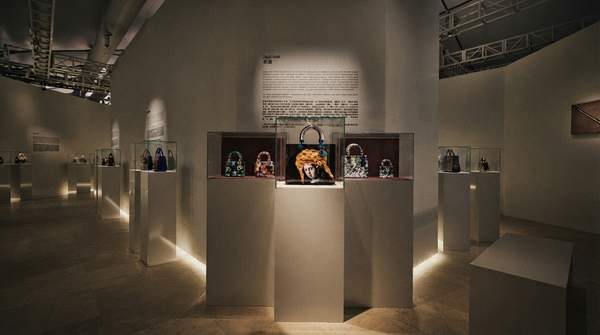
When a luxury house commissions a contemporary artist, the question is no longer whether the partnership will look good on a handbag. The real question is what the collaboration is for. Drawing on academic work on brand equity, retail research, and industry analysis, three distinct strategic models emerge: infusing art into brand identity, building cultural capital, and pursuing social transformation. Each creates a different kind of value—for the brand, for the artist, and for the consumer—and confusing them is how a partnership ends up feeling like a gimmick.
The Evolving Landscape of Luxury Brand-Artist Collaborations
The scholarly framing here comes from Jean-Noël Kapferer, whose concept of "artification" treats art not as decoration but as a deliberate strategy woven through the luxury value chain. As one brand-equity study of luxury-art collaborations summarizes his position, artification is "a process of transformation of non-art into art," requiring "the active collaboration of art authorities and renowned artists," with the goal of changing "the status of the luxury brand, of its founder and luxury products" and reinforcing "the idea of a better-than ordinary luxury brands whose price and symbolic power are undisputed."
In other words, art has become infrastructure. A 2025 study by Ryszard Kłeczek and Monika Hajdas on what they call the "appreciation task" pushes this further, arguing that the value of luxury brand–artist collaborations lies in their ability to "enact meaningful social and cultural transformations"—a claim we will return to. The point for the reader: these partnerships are strategic instruments with distinct objectives, not interchangeable marketing stunts.
Strategic Model 1: Brand Identity Infusion
The first and most visible model uses the artist to refresh, or even redefine, the brand's own aesthetic identity. The canonical example, as Sotheby's Institute of Art recounts, is Louis Vuitton's 2003 commission of the Multicolore monogram by Japanese artist Takashi Murakami—a "vibrant, colorful pattern" that was "a bold departure from Vuitton's classically understated branding," adorning handbags, accessories, and apparel.
Under Kapferer's artification logic, this is identity work at the deepest level: the artist's signature becomes part of the product's symbolic power, elevating the brand's status rather than merely decorating it. The consumer buys not just a bag but an object with a foot in contemporary art. The risk, of course, is that the artist's visual world can overwhelm the house codes—which is precisely why the fit between brand and artist matters so much, a point the equity research makes explicit.
Strategic Model 2: Cultural Capital Creation
The second model operates less on products than on the brand's cultural position. As Sotheby's Institute of Art puts it, collaborations with artists "add a cultural layer to luxury consumption, providing consumers and audiences with a perceived sense of connoisseurship." The brand becomes a patron, a tastemaker, an institution.
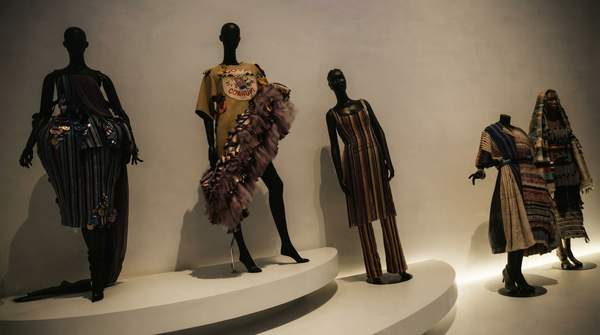
Retail research on aesthetically oriented luxury strategies captures this vividly in a coined term, the "M(Art)World": stores whose "sleekly elegant architecture, interior design, and adroit use of lighting" are "modelled after those of museums housing world-class exhibits," where "objects for sale are displayed alongside actual art, rendering both products equivalent," and where "employees function as curators, offering guidance and knowledge, as well as goods for sale." The consumer is no longer shopping; they are visiting. The value created here is connoisseurship itself—the brand lends its audience cultural fluency, and the audience lends the brand cultural legitimacy.
Strategic Model 3: Social and Cultural Transformation
The third and most ambitious model, articulated in Kłeczek and Hajdas's 2025 research, treats the collaboration as an instrument of enrichment rather than acquisition. Their "appreciation task" proposes that a relevant outcome of luxury brand–artist collaborations is "an appreciation of the purpose of the focal art," which "enriches the consumers by transforming their decoration-centric practices into appreciation-centric ones."
This is a genuine departure from the first two models. Rather than asking art to elevate the product or the store, it asks the collaboration to change how consumers engage with art at all—from consuming images to understanding purpose. The brand's value proposition becomes educational and transformative; the artist gains a platform for meaning-making at scale; and the consumer leaves with altered practices, not just altered possessions. It is the rarest model, and the hardest to execute, because it cannot be faked with a limited-edition print.
Comparative Framework of Luxury Brand-Artist Collaboration Models
The table below categorizes the three models by their primary objective, showing how the form of the partnership—product, retail environment, or cultural program—aligns with its intended goal.
| Model | Strategic Goal | Typical Execution | Primary Value for Brand | Primary Value for Artist |
|---|---|---|---|---|
| Brand Identity Infusion | Transform the brand's status and reinforce its symbolic power by integrating art into the value chain (Kapferer's "artification") | Commissioning artists for iconic product designs, e.g., Takashi Murakami's 2003 Multicolore monogram for Louis Vuitton | Elevated status and a distinct, art-infused identity | Massive awareness through placement on iconic products |
| Cultural Capital Creation | Add a cultural layer to luxury consumption, giving consumers a perceived sense of connoisseurship | Museum-like retail spaces ("M(Art)World"): art displayed beside merchandise, employees acting as curators | Cultural relevance and positioning as a patron of art | Institutional framing of their work alongside luxury craft |
| Social/Cultural Transformation | Enrich consumers by shifting decoration-centric engagement into appreciation-centric engagement (the "appreciation task") | Collaborations designed to surface the purpose of the focal art itself | Perceived as an agent of meaningful social and cultural change | A platform for purpose-driven, transformative reach |
Read across the rows, the framework shows a clear progression: the artist moves from designer, to exhibited cultural figure, to agent of change—and the brand's claim on the consumer moves from status, to taste, to transformation.
Keys to Successful Collaborations: Mutual Value and Strategic Fit
Whatever the model, the equity research identifies the same decisive factors. A qualitative expert survey on luxury brand-artist collaborations found that "awareness and quality are the two common drivers of brand and art(ist) equity," and that these same parameters are "decisive factors for a match/fit to be made between the luxury brand and the artist." The collaboration, as that analysis puts it, works when someone acts as "an enabler and bridge builder, moderating between the two stakeholders, luxury brand and artist, by creating mutual understanding."
Mutual value is not a slogan here. Case-study research on luxury fashion houses partnering with Korean artists found that such partnerships let brands "localize and engage more personally with Korean consumers while building deeper relationships with international consumers by leveraging the continuously growing global popularity of Korean culture"—while giving artists "a platform to reinterpret iconic bags into artwork." Both sides gain equity. And as YouScan's Olesia Melnichenko observes of brand collaborations generally, the ones that work "pair complementary brands with aligned values, target a specific audience, and give people something they didn't know they wanted"—with the most successful partners tracking "not just sales—brand visibility, media coverage, audience sentiment."
Choosing the Right Collaboration Strategy for Lasting Impact
The decision, then, is not whether to collaborate but which model to pursue. Luxury brands should strategically align their artist collaborations with clear objectives—whether to infuse brand identity, build cultural capital, or drive social transformation—ensuring a mutual fit with the artist's values and vision. The artist's own practice should determine the model: a visual signature suits identity infusion; an institutional sensibility suits cultural capital; a purpose-driven body of work suits transformation.
The measurable indicator of success is observable rather than proprietary: enhanced brand perception, increased cultural relevance, and the ability to foster deeper consumer appreciation beyond commercial appeal. If a collaboration moves those three things—perception, relevance, appreciation—it has done its strategic work, whichever model it follows. If it moves only units, it was decoration all along.