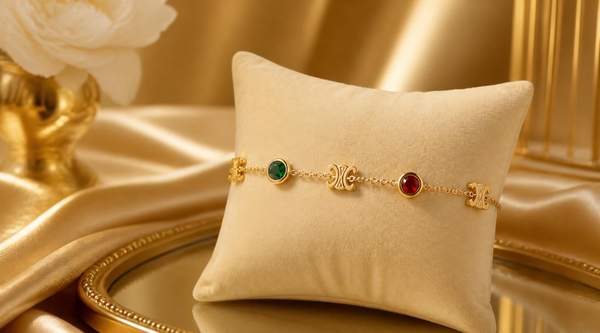
A tennis bracelet creates an uninterrupted line of diamonds around the wrist. A station bracelet does something almost opposite: it lets the chain show, giving each diamond its own space and making the gaps part of the design.
That lighter rhythm gives Ritani diamond station bracelets a distinct place beside tennis bracelets and bangles. If you want diamonds on the wrist without filling every inch with them, the appeal is less about reducing the jewelry and more about changing how the sparkle appears.
Let the Chain Become Part of the Design
A diamond station bracelet places individual diamonds at intervals along a fine chain. Instead of one continuous row, the eye moves between diamond, chain, and diamond again.
That spacing creates a different visual effect from a tennis bracelet. Each stone reads as an individual point of light, while the exposed chain contributes its own color and texture to the bracelet.
Ritani currently separates station bracelets from tennis bracelets and bangles within its diamond-bracelet collection. The categories may all put diamonds on the wrist, but they create very different lines.
A station design can feel especially appealing when you like delicate jewelry but still want the diamonds to be unmistakable. The spaces keep the composition open rather than visually dense.
Compare Three Different Lines on the Wrist
The easiest way to understand a station bracelet is to compare its structure with the other bracelet styles beside it.
| Bracelet Style | Visual Line | Styling Role |
|---|---|---|
| Station bracelet | Diamonds spaced along a fine chain | Light, open diamond detail with visible metal between stones |
| Tennis bracelet | A continuous sequence of diamonds | Consistent sparkle across the wrist |
| Bangle bracelet | A more defined metal form, sometimes with diamond accents | Stronger structure and a more substantial outline |
None of these needs to replace the others. The useful decision is which visual line belongs in the jewelry collection you actually wear.
Someone who already owns a tennis bracelet may prefer a station bracelet precisely because it does not repeat the same effect. The open chain creates contrast, giving the second bracelet a reason to exist beyond simply adding more diamonds.
Five Stones Can Create a Deliberate Rhythm
Ritani’s current diamond-bracelet assortment includes the Five-Stone Round Natural Diamond Station Bracelet. Its design uses five round natural diamonds spaced across the chain rather than arranging them in a continuous row.
Five stones are enough to create a recurring pattern without turning the bracelet into a full diamond line. The placement lets each round diamond register separately, so the bracelet’s identity comes from both the stones and the distance between them.
Ritani currently offers this design in 0.25, 0.50, and 1.00 carat total weight options. Changing the total carat weight alters the diamond presence while keeping the same basic station concept.
That makes carat weight a visual decision rather than simply a number to maximize. A lighter total weight keeps the stations more delicate, while a larger option gives the individual diamonds more presence against the chain.
Think About Sparkle in Intervals
Continuous sparkle can be dramatic because there is little visual interruption between stones. A station bracelet creates flashes instead.
As your wrist moves, the diamonds catch the light at separate points. The chain remains visible between them, so the bracelet can appear airy even though the stones themselves remain distinct.
That quality can suit someone who wants a diamond bracelet for frequent wear without choosing the stronger visual density of a traditional tennis design. It also gives the bracelet a different relationship with a watch, a metal cuff, or other jewelry worn nearby.
The open structure keeps the individual elements easy to read. Rather than seeing one uninterrupted band of brilliance, you see several small focal points connected by precious metal.
Choose Carat Weight by the Look You Want
Carat total weight describes the combined diamond weight in the bracelet. In a five-stone station design, that total is distributed across the individual diamonds rather than concentrated in one center stone.
This means two station bracelets with the same number of diamonds can still create noticeably different effects. Larger stones occupy more visual space at each station, while smaller stones preserve more of the chain-led appearance.
If your main attraction to the style is its delicacy, the lighter carat-weight options may fit that preference more naturally. If you want the diamonds to take a stronger role while preserving the spaced arrangement, a higher total weight moves the design in that direction.
Ritani’s current 0.25, 0.50, and 1.00 CTW options make that choice unusually easy to picture. You are selecting how strongly the five diamond stations should register, not deciding whether the bracelet needs more stones.
Give a Station Bracelet Its Own Role
A station bracelet works well as an individual piece because its design already has a clear rhythm. The open chain prevents it from needing additional bracelets to look finished.
Worn alone, it can add diamond detail without dominating the wrist. That makes the style suitable when a full tennis bracelet would feel more formal or visually substantial than you want for the occasion.
The same openness also gives it room within a layered wrist. A station bracelet beside a solid metal bangle, for example, creates contrast between flexible chain and rigid form.
Beside a tennis bracelet, the contrast is different. One piece provides a continuous diamond line while the other introduces pauses, preventing the combination from reading as two versions of the same bracelet.
Layering can therefore be an option without becoming the bracelet’s whole purpose. The station design earns its place first through its own spacing and proportion.
Consider Metal as Part of the Negative Space
Because more chain remains visible in a station bracelet, metal color has a stronger visual role than it might in a densely set diamond bracelet.
Yellow gold can make the connecting chain a warm part of the composition, while white metal can keep the visual transition between diamond and chain cooler. The right effect depends on whether you want the metal to contrast with the diamonds or sit more quietly around them.
This is another reason station bracelets can work well with an existing jewelry collection. If most of your everyday pieces share a metal color, the visible chain can connect the diamonds to the rest of what you already wear.
The metal is not simply structural material holding the stations together. In this bracelet format, it occupies enough of the wrist to participate in the design.
Choose Station Style for the Space, Not Just the Stones
Diamond jewelry often directs attention toward carat weight, shape, and sparkle. A station bracelet adds another design variable: how much open space you want around those diamonds.
That can make the style especially satisfying for someone who prefers restraint without wanting the diamonds to disappear. The stones remain deliberate focal points because the bracelet gives them breathing room.
Ritani’s five-stone design makes that idea easy to see. Rather than filling the wrist with repeated settings, it lets a smaller number of diamonds define the pattern.
The result is a diamond bracelet with a different kind of presence. It attracts attention in intervals, letting the wrist, chain, and stones share the composition.
Frequently Asked Questions
What is a diamond station bracelet at Ritani?
A Ritani diamond station bracelet places diamonds at spaced intervals along a chain rather than arranging them in one continuous row. The exposed chain becomes a visible part of the design and creates a lighter overall line around the wrist.
How is a Ritani station bracelet different from a tennis bracelet?
A Ritani tennis bracelet creates a continuous sequence of diamonds, while a station bracelet leaves visible sections of chain between individual stones. The station design therefore produces separate points of sparkle rather than an uninterrupted diamond line.
Can a Ritani diamond station bracelet be worn by itself?
Yes. A Ritani diamond station bracelet has enough visual structure to be worn as a standalone piece. The spacing between the diamonds gives the bracelet its own rhythm without requiring additional jewelry around it.
Can Ritani station bracelets be layered with other bracelets?
Yes. Ritani presents diamond bracelets as pieces that can be worn individually or layered, and a station bracelet can create useful contrast beside a tennis bracelet, bangle, or other wristwear. The visible chain helps distinguish it from denser diamond styles.
Does Ritani offer different carat weights in its diamond station bracelet?
Yes. Ritani currently lists its Five-Stone Round Natural Diamond Station Bracelet in 0.25, 0.50, and 1.00 carat total weight options. The different weights let you adjust the visual presence of the five diamonds while keeping the same spaced-station concept.
Give the Diamonds Some Room
A station bracelet proves that adding open space can change diamond jewelry as much as adding more stones. The chain creates pauses between each point of sparkle, giving the bracelet a lighter line and a look that remains distinct from tennis and bangle styles.
Find Ritani’s diamond bracelets to compare the station design with other wristwear and decide how much diamond, chain, and open space you want in the finished look.